Powder Coating Near Me

An international directory of powder coating

  • Find a Coater
  • Directory
  • Add a Coating Shop
  • Q&A
  • Jobs
  • About Us
  • Login
  • Custom Coater Live Events

What’s working now on social media in powder coating

June 28, 2023 by pcnearme

[et_pb_section fb_built=”1″ _builder_version=”4.16″ _module_preset=”default” global_colors_info=”{}”][et_pb_row _builder_version=”4.16″ _module_preset=”default” global_colors_info=”{}”][et_pb_column type=”4_4″ _builder_version=”4.16″ _module_preset=”default” global_colors_info=”{}”][et_pb_text admin_label=”Text” _builder_version=”4.20.2″ _module_preset=”default” global_colors_info=”{}”]In our exclusive interview with Danielle Miller, Owner of Miller Media Management, we uncover some of the strategies powder coating companies can use when posting to social media platforms like Instagram & Facebook.

[embedyt] https://www.youtube.com/watch?v=5Vc1ertl3zQ[/embedyt]

RossKote (Kim Scott): [00:00:00] In this episode of the Powder Coater Podcast, we introduce you to Danielle Miller and welcome her as our podcast, first resident guest. She’s a media strategist who’s well versed in powder coating. Danielle has been featured in HubSpot in Huffington Post, and she’s here to talk about what’s now working in social.

Find out why using the newest features on Instagram will get you noticed and how to build a stellar profile. She explains how Pinterest can lead to website growth and why Facebook wants you to join a group. We’ll also cover how to use partnerships to gain access to more followers and clients, as well as what the must have hashtags are for powder coaters.

It’s all about building marketing strategies for your brand on social. Let’s get ready to level up your powder coater game.[00:01:00]

Welcome back to episode 11. I’m Kim Scott, your host of the Powder Coater Podcast, where you’re listening to influencers and, we’re interviewing and covering trending topics so that powder coaters can effectively learn and grow their business. And today I am super stoked. I’ve got a girl on my side who has been my partner in social media and my group, my go-to guru.

Fortunately she resides right here in Maui, Hawaii. She’s the owner of a top rated social media marketing company here. Her mission is to help entrepreneurs [00:02:00] anchor on results when it comes to marketing their businesses online. And her articles and presentations have been mentioned in HubSpot Social Media Today, and Social Media Examiner.

She’s also a prolific Pinterest producer, so to speak. So welcome aboard, Danielle Miller. How are you today?

Danielle Miller: Hey Kim. Doing great. Super stoked to be on the Powder Coat podcast today and talk about marketing. You know, that’s my, my jam. That’s where I get nerdy.

RossKote (Kim Scott): Yeah, and you and I met back in 2015 when I was struggling with social media. I had not ever tried Instagram, didn’t really know much about Facebook in, in terms of business Facebook. And you and I collaborated on a project together for another business I owned at the time and [00:03:00] really kind of sidelined Maui Powder Works. Because we hadn’t really taken ourselves too seriously and you were there for me.

You were there to review my, and give me feedback on my website, my approach to, the market, my message to the market and who my audience was. So I really do thank you and appreciate everything that you’ve done for me, and I know that you have something very valuable to share with our listeners today.

So I’m happy that you’re here.

Danielle Miller: Thanks. Yeah. We have a lot of big changes happening on social media right now and, it made for perfect timing to hop on and let all the powder coaters of the world know about what is the latest and greatest, what’s, what’s working now.

RossKote (Kim Scott): Yeah, and I think this perfectly segues with a lot of what our previous podcast was about with, Jace Kaser, from Kaser coating about how he markets his business, and does social media and how [00:04:00] he produces content on whatever platform he’s using. So I’m happy that we’re here to discuss maybe a little bit more in detail about how to. Bring a balance to your social media cuz it can get overwhelming if you don’t know where to start or how to do it.

And also how does that convert into leads and sales and new customers, without having to spend a bazillion dollars just in advertising. And we’re not gonna really address advertising today. We’re gonna talk about just the organic reach that you can do. With some of the things that we’re gonna talk about today, some of the, some of the ideas, that you can implement today in your business, Right?

Danielle Miller: Absolutely. And help you get focused, so you don’t feel overwhelmed and you know, kind of what, what are the new trendy things and what are the tried and true things that are always working?

RossKote (Kim Scott): Yeah. [00:05:00] I think that’s kind of the problem is sometimes you can get really burnt out for those that have experience with instagram and social media and what it’s like out there already. We are gonna address some of the more advanced concepts as well in this podcast. And, you know, for the new guys out there that need to get started, I hope to maybe give you a little bit of encouragement or confidence that you can do this.

[/et_pb_text][et_pb_text admin_label=”Listen Now” _builder_version=”4.20.2″ global_module=”20170″ saved_tabs=”all” global_colors_info=”{}”]

Listen Now

[button link=”https://link.chtbl.com/powdercoaterpodcast?utm_source=chartable+smart+link” color=”orange” newwindow=”yes”] Click Link[/button]

The voice of custom coating.

Listen to the powder coater podcast


[/et_pb_text][et_pb_text _builder_version=”4.20.2″ _module_preset=”default” global_colors_info=”{}”]


Because, you know, if you’ve been on social media, you know, you know how exhausting it can be. And you know, sometimes you just need to take a break and it’s okay to do so. But when you take that break, how do you jump back into it, because as you know, social media changes all the time.

And so that’s what we’ve got you here for is to give us the latest, greatest on Facebook and Instagram. So let’s hop into this.

Danielle Miller: Yes, let’s dive right in. Okay, so, let’s start with Instagram. And the reason I like to start there is cuz if you’re somebody who is overwhelmed with creating content [00:06:00] for every one of your platforms, then you need to be thinking of Instagram as the top platform that you create for and let.

The content you create on Instagram, trickle down to your Facebook and trickle down to your Twitter and trickle down to your Pinterest. So let’s start with Instagram. The latest and greatest on Instagram right now is “Reels”, and that is a contender for TikTok. It’s basically, just the same way that Instagram came in and copied Snapchat and integrated the same features that Snapchat offered right into the Instagram platform.

They’ve now integrated a lot of the same features that were on TikTok, right into Instagram with reels. So reels are, at the moment, still a bit clunky, but what’s happening with them is if you’re participating in reels and creating reels, you are actually getting. A lot of preferential treatment in terms of getting your content featured on that Instagram Explorer tab.

So we talked about, you know, today’s focus really being organic reach, that unpaid [00:07:00] reach, that reach that anybody can get as long as they’re creating quality content. And the the important thing here is that if you can get your content featured in that explorer tab, then you have a very high chance of being introduced to a lot more people for free.

It’s like getting a free ad on Instagram. So the, the short and quick on reels is that they are slightly longer videos that allow you to overlay text on top of your video and also do transitions between your, videos. So you see sometimes people come in like you might be showing a rim, right?

You’re showing a before and after. Is the concept of the reel. And you might show a rim, take a little video of it. Then when it comes out of the processes and it’s completely done, and like right before you’re giving it to the customer, you can now overlay that before picture of the rim, video of the rim. Right with your brand new video of the [00:08:00] rim, and have it transition within this Instagram reels video. And overlay text that says, you know, this process took this long. But the result was amazing. And here’s what the client had to say. And you can fit all of that in as long as you can fit it in, in a short period of time.

 They’re really like the 15 second. Now you can go up to 30 seconds with your reel. Those are really, really well received these days. .

RossKote (Kim Scott): Wow. So that’s something new because I had been guessing about the reels and we kind of took a step back from Instagram and sure enough, right as we were moving into our new shop. That’s right when reels was getting launched. And of course I missed out. So it’s good that we’re talking about this. Of course I’m not on TikTok, but a lot of people are, and this is a great way to kind of learn a little bit more, and maybe you just start with reels.

I don’t know, do you have to build up your profile first? I mean, do we wanna kind of backtrack a little bit or[00:09:00] if someone wanted to get started or just maybe only has a handful of followers right now, do you suggest they go directly into reels or still continue to build up their profile?

Danielle Miller: So I think it’s great to do both simultaneously because, as long as you’re using the appropriate hashtags and whatnot in, in your post, you’re gonna end up getting that organic reach and attracting your followers. And then with the reels, Instagram’s gonna place you in that Instagram Explorer feed if you’re getting enough engagement on your reels and for the followers that you already have.

Let’s say you’ve done the thing where you’ve invited your customers, you’ve invited your friends and family, and you’ve made it up to maybe 250 followers on Instagram. You know, you’re just getting started. Now you can really develop some tight relationships with those 250 people by participating in reels, cuz Instagram is gonna show that content to those people.

You know, it’s like, it’s almost as [00:10:00] if it bypasses the algorithm, right now because it’s a new thing they really want it to take off. So I would say, yeah, you gotta get the basics right. So you have to make sure your Instagram bio is solid. That means you’re not telling people. About what you offer in terms of services and instead you’re telling people why you’re worth following on Instagram.
benco sales b17 ad

And also with your bio that you’ve got your website link in there cuz that’s the only clickable link you’re gonna have on your Instagram account until you have 10,000 followers. and that you’ve taken the initiative to go ahead and become an Instagram business profile so that you get the insights and analytics about your content, because that’s the only way you are gonna know what’s working and what’s not, so that you can focus your efforts on the things that are actually producing results.

RossKote (Kim Scott): Yeah, I think, you’re hitting on some pretty key points about Instagram that I think [00:11:00] commonly get overlooked. From when I’ve looked at other coaters profiles and stuff, is this lack of the profile or, you know, lack of information on the profile. I know we’ve kind of hashtag stuff on our profile.

We’ve kind of put in powder coating as a hashtag within the profile. Is that not valid anymore to do? Do you still recommend that?

Danielle Miller: I still recommend putting, let’s say, one to two relevant hashtags in the profile. Although, honestly, I haven’t seen the return come in. There’s no way to really track if your profile is really being featured under those hashtags.

What I have found is that if somebody tends to follow that hashtag, then you are more likely to show up in the recommended profiles after they follow somebody else who’s been using that hashtag. . So that’s kind of the benefit about putting it in your profile. But keep it short, You know, this isn’t like when you stick those 30 hashtags in [00:12:00] your caption or in your first comment.

This is one or two core hashtags. I recommend one be geographic, right? So for, for us here in Maui, you’re hashtag tagging Maui. If you’re in London, you’re gonna hashtag London, right? And the other one be industry specific. So powder coating. Something very specific to the, your style or aesthetic could also work.

RossKote (Kim Scott): Right, like if you’re just doing break calipers or, certain kinds of rims or, you know, certain kinds of customers that have like, you know, customized, race cars or something like that, that makes sense. Totally, I mean, pander to your audience, really. I mean, who is it that’s coming to your shop and who do you wanna get more business from?

Danielle Miller: Yep, definitely.


[/et_pb_text][et_pb_shop posts_number=”3″ _builder_version=”4.20.2″ _module_preset=”default” global_colors_info=”{}”][/et_pb_shop][et_pb_text _builder_version=”4.20.2″ _module_preset=”default” global_colors_info=”{}”]

RossKote (Kim Scott): So do the reels translate into the Facebook feed, or is it just still Instagram stories to Instagrams, to Facebook stories?

Danielle Miller: So Instagram stories to [00:13:00] Facebook stories is the flow. However, with reels, you have the ability when you’re uploading them to send them to your story. So in that way, you can put a clip of your reel into your story and send that also to Facebook.

 And that’s one way to go ahead and reuse that content. And in essence, just think of, with stories for those of you who aren’t using them yet, I wanna encourage you to get ahead of the curve now because the trend is actually to post less and less in your newsfeed and post more and more in stories.

So I’m seeing like the big influencers, the people who are really on top of their Instagram game are posting where they used to post every day in their Instagram newsfeed. They’re now posting. Maybe two or three times a week in their newsfeed and posting every day in their stories. So that’s how much more importance the big players are putting on Instagram stories right now.

And [00:14:00] reels are gonna compliment your stories because you’re able to share them directly to your stories and your feed.

RossKote (Kim Scott): Okay, well, let’s slow this roll down because now I’ve got an issue with that in a sense that it’s harder to track the analytics in stories because the analytics in stories is not as robust as it is in the profile, correct?

Danielle Miller: Oh, very true. Very true. I mean, you, you’re only getting 14 days history, first of all, so that’s tough. And you’re really just seeing about, you know, who tapped forward, who tapped back, But what you will notice is that if you’re more active in stories. Within your insights, those that count of the people who are discovering you and doing profile visits, those numbers change.

Those numbers increase. Especially the profile visits and in direct messages actually. So direct messages and profile visits are gonna increase dramatically as a result of [00:15:00] being more active in stories.

RossKote (Kim Scott): Well, that’s an interesting statistic there, you know, because that’s really where as a powder coater, that’s where you want your people to go, your audience to go.

Definitely start that conversation about rims or how much for this, or how much for that or, and also, you know, click through to my website or my, my landing page or whatever. So that’s actually interesting. So that’s what the statistics, that’s what they’re finding out now.

Danielle Miller: Yeah. That they’re definitely, they have that heightened engagement and the action that you’re taking on them is direct messages. So it instantly moves people from just being a commenter, you know, or just liking your post into starting a private direct message with them right off the bat where you can start talking to them about their needs and answering their questions.

RossKote (Kim Scott): Yeah, I hadn’t noticed that before, but I’m gonna have to start paying attention to that now because, [00:16:00] you know, I was kinda getting that organically happening just with my profile picks and stuff and my feed. But, that definitely changes the way I’m gonna approach Instagram now.

And what about Facebook’s stories? Does anybody care? Or is that just something that is just another one of those Facebook features that nobody cares about.

Danielle Miller: So the shortened skinny on Facebook stories is that they are, at this point, they’re just so easy to forward your Instagram stories to Facebook, and you’re getting featured at the top of the newsfeed.

So every time someone opens their app, if you’ve posted to your Facebook stories recently, you’re gonna be one of the four or five stories featured at the top, which is an opportunity to get your brand in front of people. So if we’re talking about easy wins. I would call Facebook stories an easy win. It’s not that you’re gonna necessarily get the direct message or get the sale from there, but it’s like if you’ve, if someone’s saying, Hey, I’m gonna give you a [00:17:00] free billboard on the highway, as long as you give me the content that you want me to put on the billboard, would you take it?

Sure. You know, so I think that Facebook stories are an opportunity just to get your brand in front of people again.

RossKote (Kim Scott): Yeah, that’s a valid point. All right, let’s move on to Facebook then. You know, we know how difficult it is to have a Facebook business page these days without having to spend hundreds, if not thousands of dollars in advertising every year.

Any changes on that front? I mean I see that there’s user functionality that’s changing for businesses to make it much easier to manage. Other than that, what else has changed in Facebook or is that the change?

Danielle Miller: So, yeah, let’s talk about that because that’s a big one that people might not know about.

In terms of user functionality that’s making it easier for people to manage their Facebook page, go to Google, type in Creator Studio. Facebook Creator Studio is [00:18:00] a free tool offered by Facebook that allows you to preschedule all of your Facebook posts and Instagram. From a desktop computer or they have a kind of wonky app for the phone as well.

And, it’s just really streamlines the process of getting your content posted. Plus it also keeps a record of all of your posts with their reach, their engagement, their comments, that you can quickly look at. So I’ve found that using Creator Studio is a really nice tool for kind of systemizing your social media marketing in terms of like, you’re gonna sit down once a month or once a week and schedule out your posts for Instagram and Facebook so that you know, you don’t have to babysit your Facebook account. You know, you’re just there really to monitor your notifications at that point. And to the other point, yeah, there’s a different change happening.

A lot of business owners are getting super frustrated with the limited organic reach from their Facebook page. I [00:19:00] mean, unless you’re getting shares. It’s really tough to reach people organically. You could have worked your tail off to get a following of a thousand people or 5,000 people and you’re seeing your posts reach, you know, maybe 200, 300 people, out of the thousand that have said, I really wanna see your content.

So the solution, right now, the trending thing, and the thing that I see getting hotter and hotter are Facebook groups. So it’s no longer about having a Facebook business page that puts your business and your brand first. Instead, it’s about being the admin, and being in control of a community of people interested in a topic.

So you create a Facebook group around, you know, well, you could do powder coating in, you know, London, right? So you could have a geographic region and an industry, or you could go specific and be like, you know, amazing rims spotted in [00:20:00] Massachusetts, right? And, and by being the admin of a group where people can feel like they can share content into it and contribute, you’re really building a community.

Which is stronger than just building your own Facebook page, which is all about you.

[/et_pb_text][et_pb_text admin_label=”Become a patron” _builder_version=”4.20.2″ global_module=”20171″ saved_tabs=”all” global_colors_info=”{}”]

Support the Show

[button link=”https://patron.podbean.com/rosskote” color=”black” newwindow=”yes”] Click Here[/button]

Get featured content. MPW swag, shoutouts & more.
sponsor the powder coater podcast


[/et_pb_text][et_pb_text _builder_version=”4.20.2″ _module_preset=”default” global_colors_info=”{}”]

RossKote (Kim Scott): Well, I have to tell you, it’s pretty interesting out there these days with powder coating and Facebook groups. And the reason why they’re exploding right now is because forms are, I don’t wanna say they’re dead, but they’re kind of what people used to go to for information.

But it seems. Powder coating is growing so quickly today that, it seems like the information that can come forward in a group can happen so quickly in order to get the answers to, you know, a post or like a troubleshooting post. Or, “Hey, can you help me out with this?” Or, “What should I try [00:21:00] here? Hey, check out this, project I did”.

It’s kind of an all around for powder coaters to go today, and it seems like every time I look there is a new, powder coating group started. I mean, it’s just changing weekly. I am currently, at the time of this recording, blocked on one of a fast growing powder coating, groups. I just found out. So, primarily because, you know, I think that there are some, sort of approach differences within the group. And, it sort of had been building and maybe coming to a head. And that’s the problem sometimes is you do have someone, that thinks of a group to be a certain way, and then, it maybe changes or people can disagree.

But the thing is that of the reason why I got into Facebook groups. Is not [00:22:00] just to promote my podcast or my content or any of that, it’s just that I found that so many, of the, of the existing groups could turn negative really quickly, because it’s competitive, rather than more helpful and that I felt like there needed to be some kind of a force in there to kind of just answer the questions people had without any kind of slight or agenda or, sales pitch kind of thing. Right. So…

Danielle Miller: Totally.

RossKote (Kim Scott): Yeah. I mean, you know, it can vary from group to group about what its content is. Most of the groups that are out there today are just general groups. They don’t really have one slant or the other, but you’ve certainly given us ideas on how to, focus in. Because the whole point of the groups is to be engaging and to get the questions answered or to get the help that you need, quickly.

Because the forums sometimes can take too long to get that answered because you’re based on people logging in or going [00:23:00] there, going to that site. Whereas Facebook is just, the engagement level is just huge.

Danielle Miller: Definitely. And Facebook has been pushing groups like crazy. So you know, if you start your own group, even if you’re starting kind of from scratch, if you can get that first wave of engagement and, and be posting on the regular and getting people to contribute to the discussion, they’ll start recommending your group to everybody who has similar categories and you can get your group to grow pretty fast. I mean, the other thing I wanna tell people about groups is like, you might think like, Oh, I can’t wait to have a group with like 10,000 members in it, or I can’t wait to have a group with a hundred thousand members in it.

Trust me, I’ve been an admin of a group with 10,000 members in it, and it sucks. It’s super hard to manage. So, get yourself to a hundred members, get yourself to 250 members and do a fricking celebratory dance. Because honestly, if you can get [00:24:00] really tight with a hundred or 200 people, think about the referrals that could bring you, right?

Don’t look at the group members as the people who will become your customers. Look at them as people that are going to become your friends and want to refer you business. And that’s gonna take the pressure off for the sale and really do exactly what you said, Kim, which was put your value first.

Put out the priority to answer people’s questions and just be of service first. And from there, the referrals will come in. So, Definitely, I like the idea of smaller, great groups that are, are super targeted in what they wanna talk about.

RossKote (Kim Scott): Yeah, I think that it’s definitely opened up for powder coating, subject matter, and it’s definitely working in a more positive direction.

But, not without, its pitfalls. And I’m sure that we’re working through it. Okay. So what, are there any [00:25:00] other platforms to, that we wanna talk about today that, changes are happening to?

Danielle Miller: Well after that intro, like, how could I not talk about Pinterest?

Right. So, Yeah, I freaking love Pinterest. For those of you who think Pinterest is just for housewives and, and homemakers and people looking up recipes, like you should look at the Pinterest report that most recently came out. They put out Pinterest themselves, put out their holiday guide and the amount of people that are on Pinterest with the intent to shop for things, for products or services or plan big projects like.

Updating their gate at their house or, you know, redoing their car. These things are super popular on Pinterest and all you need to have a really great Pinterest presence is a stream of high quality photos [00:26:00] and videos, which powder coaters are getting all the freaking time. Every single time you guys have a project, you’re getting sick photos of what you’re creating.

Yeah, uploading those to Pinterest, making sure that that image is linking back to your own website and then categorizing your pictures into however you like. You can do it by color, you can do it by, item, like you can have a board just about rims. You can have a board about architectural design.

That method of using Pinterest. Totally helps your SEO. Okay, so for those of you who didn’t realize, a killer Pinterest game is going to improve how you rank on Google, because every time someone’s repinning your images, it’s creating more back links to your website and telling Google your website is full of awesome content. [00:27:00] Pinterest is great.

RossKote (Kim Scott): I think one of the hardest things about Pinterest is just learning the platform and it seemed like they had just done a recent change or update the face of it or to the user experience level where I went there after a couple. I mean, it just, had happened recently.

Everybody, all the platforms are changing their game. Facebook, Instagram. And it just seems like we’re in that time period, or that pattern or that, you know, that time where things change. And I went there and it’s like even the, the app is different, and I just really had to reorient myself around it again.

And I’m like, Wait, this is like, it seemed like it was. Less user-friendly for the business poster or the, you know, and more user-friendly to the, to the pinner, I guess. And it should be, that’s what it’s there for. But, trying to find my analytics or any of that stuff, it was complex.

But I do see some, Instagrammers, [00:28:00] have Pinterest accounts. And they’re succeeding, even if they’re not necessarily selling a product like. A powder or some other related product to powder coating. They’re just posting their Instagram or they’re posting some pictures or a blog post.

And I am seeing some other people doing it pretty well out there too, and are getting that message. So, yeah, I think that’s, that’s a great way to end kind of the update on platforms and social media. It’s a learning curve on Pinterest, just like Instagram and Facebook. But, of the features you’ve mentioned or the benefits.

It’s definitely a playing out in our game for sure. So, talk about partnerships as we switch over, to the next segment here. What are partnerships? What are you talking about?

Danielle Miller: Yeah. Right on. So with partnerships, the important thing to remember is like this discussion is all about organic reach, right?

So we’re not talking about advertising and when, when you’re not dedicating money to an ad budget, you need to find other ways [00:29:00] to quickly reach audiences. And so a partnership could look like you partnering with, let’s say you have some like B2B business, like there’s another business out there that is a client of yours and you wanna talk about their business.

Like that’s a fantastic partnership. And that might look like you’re creating some posts on social media and tagging them in your posts and tagging them in your caption as well. And, Like, take it to stories, right? We talked about Instagram stories. If you are posting a picture of a product and you know, the partners that you work well with, whether it’s like the metal fabricators or it’s somebody else in the whole design process.

Maybe it’s an architect, maybe it’s a designer. You wanna be tagging their accounts in your stories about projects that you guys have worked on. Because it allows them in a single tap to reshare your story to all of their [00:30:00] followers.

So that’s a super easy win for how to get big organic reach without spending ad dollars.

RossKote (Kim Scott): We’ve actually done exactly that in our Instagram and in our blog posts and stuff, and it’s amazing. Especially on a blog post, I’ll look back at the analytics and, and it’s amazing how many people have clicked on, that restaurant website or that welder’s website.

And I can actually add up how many times people have clicked on it. It works and not to get too deep because I know we we’re short on time. But, we will be producing, top 25, ideas that you and I both have proven in powder coating, specific to powder coating.

 And how we can utilize this list of, different post types, for either Facebook or Instagram or Pinterest. And they all work fabulously. But the main takeaway for social [00:31:00] media is that you are educating your client or your audience, whether it’s something like, making an appointment or like how to make an appointment or how to book or how to drop off, rims.

When do you come in? What do I need from you? Are we full service or do you need to take your rims off and bring ’em to us? What’s the difference between someone that you know, doesn’t or does, you know? It also, I think I found that inspiration in inspiring our audience to the potentialities of color or making your rims look new or just giving people that inspiration that they need to like, “Yeah, I can get this done”.

And then also just kind of telling your story is another. Or even just talking about your services, or the backstory behind a project, sort of, you know, just, obsessing about those things. Would you [00:32:00] agree?

Danielle Miller: Oh, fully, these days on social media, it’s all about nailing the story and, and being of service, meaning answering the frequently asked questions.

One of my favorite tips. Kind of collecting those questions is, a lot of us get those questions via email. Like a customer, you know, maybe you’re talking with a customer about a product and either they’ve phoned you or they’ve emailed you and they’ve got a question like, you know, do I need to take my rims off?

Or you guys full service? You do that for me? And keep a little bank of those questions. So whether you are like BCCing another email address, like go into Gmail, create a FAQs for my company@gmail.com and just BCC that email address every time you’re answering a question for a customer that you’ve heard before, that you think other people are gonna have that same question, and all of a sudden you just go to that inbox, that FAQs for my company@gmail.com, inbox and like [00:33:00] it’s full of all of these questions and prewritten answers that you can now copy and paste into your social media content.

RossKote (Kim Scott): I’ve done that. In terms of like, especially sometimes when you have to go through a very lengthy email to explain to a customer; particularly architectural customers, cause they wanna know more about, you know, the durability or longevity of the finish that you’re giving them. And I can’t tell you how many times I have written that same paragraph over and over. And I finally got it straight and realized I should just save this and put it into a blog post, which I ended up doing on our gate post that we just put out on Pinterest about how to get your gate finished. From start to finish, do you get a pre-made gate or do you get a custom fab?

And what, you know, substrate do you use? What finish do you want? How do you do this? And it turned into like a 2000 word,[00:34:00] blog post, which was amazing. I can’t believe I actually had the time to write that thing. The landmark post, happy to have miles stoned it, and I’m ready to put that one off to the side.

So, before we wrap up, let’s talk about one last thing, and that is hashtags, because that’s where I see maybe, a lack of effort, about hashtags. Which hashtag specifically do we use for the powder coater or custom coating? And we can go through, I have a list of them that I use. Let’s talk about hashtags.

Danielle Miller: Yeah, sure. So the quick and dirty on hashtags is number one, you gotta have a strategy. That’s the thing is sometimes I don’t think it’s the lack of effort. I think it’s simply a lack of strategy. People have no idea how to use them. Here’s the, the best tip, simplest tip I can give you for hashtags is stop using hashtags that have over 2 million posts associated with them.

If you’re using hashtag rainbow and it’s got 8 million posts [00:35:00] associated with it. You are wasting one of your 30 hashtags completely wasting it because you will not show up in top posts for that. So all you’re gonna do with a hashtag like that is attract the spam commenters. Instead, what I want you to do is get a little more creative.

Like did you know that when you take a hashtag, let’s say like hashtag. Just powder coating, Right? And then you add an emoji to it that at that point, it’s actually a completely different hashtag. So, You might start to find niche hashtags that have only been used, you know, let’s say 50,000 posts or 20,000 posts, associated with them.

And those hashtags, you actually have a chance of showing up in top posts for them, and that should be your goal. Your goal should be to. Identify the hashtags for which when you use them, your post gets in top post for that hashtag. That should make [00:36:00] up like 20 of your 30 hashtags that you’re using should be ones that you wanna end up in top post for.

So, The other 10 hashtags that you’re using, you’re gonna put a branded hashtag in there. You know, so hashtag Maui Powder Works, or whatever your company is. Make sure you’re branding your hashtag. You’re also gonna do like geographic hashtags. People forget about those all the time. Like definitely for us, you know, it’s hashtag Maui, Hawaii, or it might be a town here or a town where you guys are located.

[/et_pb_text][et_pb_text _builder_version=”4.20.2″ _module_preset=”default” global_colors_info=”{}”]

Use your geographic hashtags. Then I want you to be thinking seasonal. Like what is in season right now? It’s Halloween, 2020, right? Start posting your orange rims and any other products that you’ve done that are black or orange. Like just start posting those pictures right now with hashtag Halloween 2020.

And that’s because right now that’s a trending seasonal hashtag. So those are my core three tips about hashtags.

RossKote (Kim Scott): Oh, you know what? As soon as we post this, [00:37:00] I cannot wait to see and go to Instagram and start to see exactly what you just said. Because I literally can see that sometimes in the groups and on Instagram is the minute we publish something on this podcast, people get right to it cuz that was a brilliant.

And it’s so overlooked, yet so easy, and so like, just like, duh, but you know, we get so wrapped up in the day to day of just even taking a picture or or doing a before and after. It’s really hard just to get that going or get that started. I know that we’ve kind of, slacked off on our Instagram game.

 I’m looking forward to getting kind of right back in. In fact, I have it right on the, my top 10 lists of things to do this week is to get out three new posts and not just rely on a podcast post to put in my Instagram feed, but to really, catch up with all the projects that Ross has done since we [00:38:00] moved into our new shop.

But it’s hard when you get off that horse, that rail line and then you gotta hop back on again. It’s hard to get back into it too once you’ve been off. So it’s, It’s just a challenge, but it’s also okay to just take a break and then listen to a podcast like this where we have an expert in social media.

Get us inspired to do more. Well that’s awesome, Danielle. I think this is a great place to just end, so tell us how do we get on hold of you? What’s your website? All that good.

Danielle Miller: Sure you can find me everywhere at mmm social media. So website mmmsocialmedia.com.

Instagram mmm, social media, Facebook, facebook.com/mmmsocialmedia. Same thing for Pinterest, mmm Social Media. So, and that’s mmm, like, Mm, it tastes really good. So, I can’t wait to see you guys there. And I do a ton of online workshops, so you know, if you guys are looking for some serious [00:39:00] training, that’s pretty dang affordable.

I’m doing livestream workshops at least once a month.

RossKote (Kim Scott): Oh, wow. That’s something new because I’ve been seeing you like locally in public spaces where you have your in class stuff, but I guess because of Covid 19, things have kind of changed up for you.

Danielle Miller: Totally. Yep. We’re doing a lot of online teaching this season.

RossKote (Kim Scott): Well, that’s good because I think your message is, so well put and so easy to grasp. I obviously saw that in a lot of the classes that I attended in, you know, in person where you have completely changed someone’s attitude towards social media. I know we all start up in these classes going, I don’t know why I’m here.

There’s nothing that this pod, you know, that this, Instagram can do for me. I’ve tried, I’ve tried this, I’ve tried that. So, I always walk away with something new and a new understanding if it’s, you know, coming from whatever you’re teaching. So thank you for that. And yes, you [00:40:00] should go check out our website.

I’ll make sure to put a link in the podcast page, so that you can click to it very easily. And we’d like to thank our supportive followers and fellow powder coaters out there. I hope you’ve learned something new about your Instagram game, and your powder coating business. Please, comment, below and, share the podcast, follow us and share it on Facebook groups.

If you have a topic you’d like to discuss, just email us at info@mauipowderworks.com. Aloha!

[/et_pb_text][et_pb_text admin_label=”be our guest” _builder_version=”4.20.2″ background_color=”#D6D6D6″ global_module=”20173″ saved_tabs=”all” global_colors_info=”{}”]

Be Our Next Guest

Do you have a topic to discuss? Product or service? We’re looking for you.  Help us build a community around powder coating.

Contact Us 
Info@Maui Powder Works.com

[/et_pb_text][et_pb_text _builder_version=”4.20.2″ _module_preset=”default” global_colors_info=”{}”][/et_pb_text][et_pb_text _builder_version=”4.20.2″ _module_preset=”default” global_colors_info=”{}”][/et_pb_text][et_pb_text admin_label=”2022 blog wrap up” _builder_version=”4.20.2″ global_module=”18725″ saved_tabs=”all” global_colors_info=”{}”]

About us

RossKote is committed to sharing their experience in metal coatings, painting, and restoration so customers & powder coaters can navigate the process of powder coating and make the best choices for getting their projects done.

RossKote regularly contributes helpful videos on his blog and YouTube channel.

Join us.  As we build a powder coating community online to share our passion for performance finishes by subscribing to RossKote’s Powder Coater Podcast

Connect with us. Comment below. What would you like to know more about? I love to answer everyday questions to the consumer market wants to know about powder coating.   

MAUIPOWDERWORKS.COM
Copyright 2016-2022©
[/et_pb_text][/et_pb_column][/et_pb_row][/et_pb_section]
Filed Under: All Posts, Podcast Tagged With: benefits of powder coating, brand, customer service, Danielle Miller, Facebook, how powder coating works, Instagram, metal coatings, Miller Media Management, powder coating, re powder coating, social media, steps to powder coating

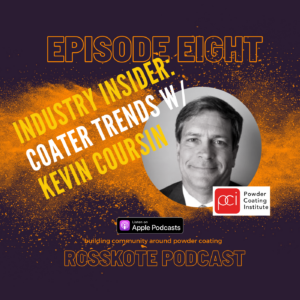
Industry Insider: Powder Coating Trends with Kevin Coursin

June 6, 2022 by pcnearme

[et_pb_section fb_built=”1″ _builder_version=”4.16″ _module_preset=”default” global_colors_info=”{}”][et_pb_row _builder_version=”4.16″ _module_preset=”default” global_colors_info=”{}”][et_pb_column type=”4_4″ _builder_version=”4.16″ _module_preset=”default” global_colors_info=”{}”][et_pb_text _builder_version=”4.17.3″ _module_preset=”default” global_colors_info=”{}”]In our exclusive interview with Kevin Coursin, executive director of the Powder Coating Institute, we reveal current and future trends for the global coatings market. He’s here to paint a broader outlook to the powder coating market and discuss what its like to be in this industry.


[embedyt] https://www.youtube.com/watch?v=IX6Efy9_1YU[/embedyt]

[/et_pb_text][et_pb_text _builder_version=”4.17.3″ _module_preset=”default” global_colors_info=”{}”]

RossKote (Kim Scott): Today. We’re talking about the state of our industry. With someone who has their hands, knee deep in it. Kevin Coursin is the executive director of the Powder Coating Institute. He’s here to share some insights and highlights from the recent annual meeting. I’d like to tease out from him, some of the broader strokes, from the data he presented. In the hopes of giving you a bigger picture of our industry and what it may mean for you.

RossKote (Kim Scott): So how long have you been working in the industry and how did you get started?

Kevin Coursin (PCI): I’ve actually been in the paint industry for 38 years now. Long time ago after I graduated from college with my engineering degree, I started working at one of the general motors assembly plants and being just a plant engineer, working on various projects.

Kevin Coursin (PCI): My boss came up to me after two years and said, Kevin, I got good news giving you a 10% raise; and I was extremely happy with that. He says, but you’re going third shift. You’re going to be the maintenance supervisor and the paint shop. And that’s how I was introduced to paint. Now it was liquid paint. It wasn’t powder back then that they had, but I learned a lot about the processes about the equipment and what it took to maintain it.

Industry insider kevin coursin on the powder coater podcastKevin Coursin (PCI): So it was quite an education for two years. After that the came up to me and said, Hey, Kevin, you’re an engineer and you’re in paint. There’s a new plant we’re building in Michigan, we would like you to transfer over there, give you a promotion and you’re going to install a new paint shop.

Kevin Coursin (PCI): And I went and took it. Then it was again, quite an education that we had put together and working with a group. And then I learned how to design, how to build and manage putting it all in and starting it up. After that the market wasn’t as good in the automotive market. So I decided to change a little bit of direction, and I went to work for one of the system houses as a project manager and worked at myself into a general manager sales, and eventually became president of KMI systems.

Kevin Coursin (PCI): So I’ve done a lot over the years. Just recently here in beginning of February, I started at the Powder Coating Institute is the executive director.

RossKote (Kim Scott): That’s quite an exciting career. And I find that most of the people that have been in it as long as, 30 plus years or more 40 y’all kind of start in late.

RossKote (Kim Scott): And it all happens with that. And then it moves into powder. Would you agree?

Kevin Coursin (PCI): Yeah, I think it depends which, which direction you, that you go into. I, again, when I first started there really that’s when powder coating was really at its infancy, so it wasn’t as much out there. And the automotive had been primary liquid, so that’s where my experience came.

Kevin Coursin (PCI): Then when I came over and started working in the system’s houses. That’s where I started learning about powder and both in just regular powder paint. I learned about powder porcelain enamel but also did some liquid systems as well. Did multiple, different types of systems depending on what the customer would wanted to install at the plant.

Kevin Coursin (PCI): I had a very broad education on a lot of paint equipment.

RossKote (Kim Scott): So PCI recently had their annual meeting on the state of power coating, but is there anything that stood out to you from the data that really intrigued you the most?


[/et_pb_text][et_pb_text _builder_version=”4.17.3″ _module_preset=”default” global_colors_info=”{}”]Kevin Coursin (PCI): I think on the overall market data that it was there. When you see it globally the powder market itself is little over $10.4 billion.

Kevin Coursin (PCI): And it sounds like a huge number by itself, but when you compare it against all the other types of coatings that are out there, whether it’s a house paint, auto, refinish, trailers, industrial market, that type of thing; it’s only just a little under 7% of the overall coatings market.

Kevin Coursin (PCI): The largest market itself out there is really the decorative, which is really the house paint with external and internal. That liquid paint type thing is the biggest market itself. So when you compare powder to just that it sounds like, we’re only a tiny little sliver. But when you compare the powder coating to other industrial liquid coating, which is only about 8% of the market, or wood liquid coating is 7%.

Kevin Coursin (PCI): So that’s exactly the same as powder. But powder even exceeds the auto OEM original equipment suppliers or manufacturers use of it. And the auto refinish is about 6%. When you compare the powder to those other type markets, we have been growing over the years and have taken more and more of it.

Kevin Coursin (PCI): So it is still a growing market.

RossKote (Kim Scott): Yeah. I found that right off the cuff, I found that really intriguing and encouraging too. Now on slide 11. In 2019, North America and Europe had negative growth rates. And that was the automotive production, black construction market and a flat manufacturing environment is what this slide is talking about.

RossKote (Kim Scott): And I found that really intriguing because, they were seeing that we were headed for a slowdown in late 2019, but no one really knew what the news articles were referencing. And really you can say that powder was already giving us an indicator that we were heading for a slowdown. Would you agree with that?

Kevin Coursin (PCI): Yeah, I would. And what was defined there was, it was working more on the annual basis. But if you would have broken it down and the data that they had on the quarterly basis, you could see that at the beginning of 19, things were moving along pretty well, but it definitely tailed down at the end of 2019.

Kevin Coursin (PCI): You could see that on a quarterly basis. So it was a pretty good indicator of things that we’re up and coming.

RossKote (Kim Scott): Yeah, just to continue on this slide 12, and I don’t want to drill down too deep because some of the smaller coaters like ourselves, we’re not really experiencing too much of a slow down locally.

RossKote (Kim Scott): I think that the larger coaters or industrial coaters and line coaters. They are probably the ones that are being affected more on the higher points in the market. Which they’re just basically saying that we were down 1.5%. And overall the year will be down anywhere from 5 to 15%, which is pretty much in line with what national projections are for America in general for the economy.

Kevin Coursin (PCI): Correct.

Kevin Coursin (PCI): Yeah. And again it can vary by market and like you said, some of the markets that you’re in, you haven’t seen as large of a hit, but in some of the markets that if you were dealing directly for an automotive supplier as a tier one or tier two, and that was a bulk of your work.

Kevin Coursin (PCI): And they took a really big hit in quarter two this year because they had shut down all the assembly plants. So they definitely took a larger hit then there. But the overall average, when you take them all into account, it’s probably 10 to 15% down from the market, but again, some are doing better.

Kevin Coursin (PCI): Some are not doing as well. So it really is how diversified you are or how tight you are to a single market.

[/et_pb_text][et_pb_shop posts_number=”3″ _builder_version=”4.17.3″ _module_preset=”default” global_colors_info=”{}”][/et_pb_shop][et_pb_text _builder_version=”4.17.3″ _module_preset=”default” global_colors_info=”{}”]

RossKote (Kim Scott): I think one of my favorite slides, is slide 20 because it really starts to dig down deeper into the overall custom coater market. And I was shocked by this figure on this slide, when it basically said that globally, there are over 42,000 custom powder coaters out there. Did that number shock you?

Kevin Coursin (PCI): It did shock me also. This was the first year that we had actually started breaking down for the custom coater market. And when I saw this slide, I had to call up the consultant company that was doing all the research for us and I questioned them on it. I said, really? And he said, yeah, that’s what they are finding.

Kevin Coursin (PCI): And in North America by itself there was over 6,000 that they had in just North America. And even that number, for just North America sounded quite large. Now what they don’t define is how large of a company it is. So that would include some of the very small, custom coater, little chop shops that are out there now.

Kevin Coursin (PCI): They might only be coating a few wheels at a time, but I think they’re included in those numbers. So sometimes that big number, you gotta take a little bit with a grain of salt and just do not dive down or, do a bigger breakdown into the size of the company. We hope to do that into next year.

Kevin Coursin (PCI): To try and get a better picture of the various sizes of custom coaters and how many there are in different markets and what the revenue in those markets would be.

RossKote (Kim Scott): Yeah. And just to note that on this slide, the definition of a custom coater, is a company that primarily custom coats. And that’s, if they are manufacturing a part and then powder coating it that part for another client, they’re not considered a custom (coater).

RossKote (Kim Scott): And they, on top of that, if they were to include those people, that number would double to the amount of custom powder coaters out there. That’s extraordinary.

Kevin Coursin (PCI): Yeah, it is a big number. And it’s something, it just goes to show how large of a market it overall is. Even if you just break it down into the north America or the U S that there is quite a big group of those type companies out there.

Kevin Coursin (PCI): Anybody into that market, or, you may think you have competitors, to say that you have 6,000 other ones, it can be a little bit leary. But again, we got to dig a little bit deeper into some of the numbers to break it down into size. Because there are some very large powder coaters, but there’s also some very small ones.

Kevin Coursin (PCI): So breaking that range is going to be our next step to try and get a little bit better meaningful data.

RossKote (Kim Scott): Yeah, I think that’s going to be great for us all. And I really liked slide 21 because the majority of custom coaters are using stock colors and that’s like RALs, right?

Kevin Coursin (PCI): Yeah, just the off the shelf, nothing special.

Kevin Coursin (PCI): And if you think really when you get into a lot of the custom coaters, they’re offering a slate to a bunch of companies or people, if they want something done special and they’re not going to custom and get a formulation because they’re only spraying so small amount of it.

Kevin Coursin (PCI): And I think that’s where, the stock colors are pretty much the standard for them to use.

RossKote (Kim Scott): Yeah. Now on the same side, it says, certifications play some role in the process. Are they talking about like PCI ones only, or just all kinds of certifications that are out there.

Kevin Coursin (PCI): No, there are a number of certifications that are out there.

Kevin Coursin (PCI): PCI is one of them that we have on the market. There are some others that can be done. And in fact, even some manufacturers have what they call their certification program. If you’re coating a product directly for them, they may have their spec and they’ll come in, even audit the facility to make sure that you are meeting a certification. So it can depend a little bit. There’s a lot of certification requirements out from the department of transportation in a lot of states. You have to get a certification. One might be from PCI, or it could be from one of the other areas that they may have, in order to be able to coat and provide product to them.

RossKote (Kim Scott): After this presentation was over. I started to think about what was presented on the slides and what it all meant for me, which is why I prompted to call you for an interview because I wanted to know. With powder supplies and global supply chains at risk now regarding China and the economy right now facing all nations, not just some, but all.

RossKote (Kim Scott): What does that mean for me as a powder coater? Especially a small guy. Is it going to be harder for me to get powder someday is pricing going to go up? What does that mean?

Kevin Coursin (PCI): I guess that can be always a potential issue that could have occure of getting, and it may be a particular color because there is a raw material that might be coming from China.

Kevin Coursin (PCI): And there’s a, if it’s a political dispute, there may be a short break in the action when, while they’re trying to solve it. It could be also from shipping standpoint how long it might take to be able to get some of those colors. It is an issue that’s out there. But I still think overall the world has gotten smaller and everybody has to sell to other people.

Kevin Coursin (PCI): So there may be some short term as the politicians deal with issues. But overall, we want to sell to China and China wants to sell to us so it still does everybody good to keep the commerce sorta speak flowing.

RossKote (Kim Scott): I agree with that. I hope it does mean that. And because in the end, people are just people, we all want to do and continue about our business. So now the other part of this that got me thinking was like this reshoring of manufacturing in the United States. With potentiality of shortness in the market. What does this reshoring in manufacturing, I don’t even know if you could speak on it, or if much about it.

RossKote (Kim Scott): What does it all mean for us here? If you can comment on it.

Kevin Coursin (PCI): We definitely have seen a number of companies come in to do reshoring and bringing manufacturing back to the states. I think a lot has to do that, when there were a lot of these global companies were able to bring their money that they had over back into the states.

Kevin Coursin (PCI): They’re doing more investment here. Some of the issues that you were talking about the global supply chain disruptions. They feel if they bring it back here, they have more control over it. So they’re hedging their bet a little bit to bring it here. So I think you’re going to see more of that continue.

Kevin Coursin (PCI): Again, once we can get through the pandemic side that we have here, that’s put a little bit of pause on some things, but I think you’ll see it pick back up again. Bringing more manufacturing plants into the states.

RossKote (Kim Scott): I think it will be positive for both the smaller guys growing bigger and maybe some of the other guys sharing some of those jobs for us. Now at Maui Powder Works, we’ve been a member of PCI since 2017. And we joined primarily because it’s a late legislative body because we felt that it was important for us to become part of a greater community of coaters as well as to uphold, higher standards in the industry in terms of coating and what we’re bringing about in our product line. But what is PCI and why should other custom coaters care?

[/et_pb_text][et_pb_text admin_label=”Listen Now” _builder_version=”4.17.3″ global_module=”20170″ saved_tabs=”all” global_colors_info=”{}”]

Listen Now

[button link=”https://link.chtbl.com/powdercoaterpodcast?utm_source=chartable+smart+link” color=”orange” newwindow=”yes”] Click Link[/button]

The voice of custom coating.

Listen to the powder coater podcast


[/et_pb_text][et_pb_text _builder_version=”4.17.3″ _module_preset=”default” global_colors_info=”{}”]Kevin Coursin (PCI): The Powder Coating Institute, it is a group of suppliers and users that have come together.

Kevin Coursin (PCI): Number one goal is that we want to grow the powder coating market itself. But in doing so we recognize that there’s steps that have to go along with it to make sure it happens. One of them is educating, PCI has a number of workshops and webinars. We work on standards. We have a events like the powder coating week that we put on again for education and where people can interact and network.

Kevin Coursin (PCI): We have our technical publications. We have the Powder Coating Tough magazine, which is exclusively published for the powder coating market itself, and lot of good articles, learning new things, how to to do some items there. We actually are working on the Fifth Edition of the Powder Coating Handbook.

Kevin Coursin (PCI): It’s in the final editorial revisions right now. And it looks like we’ll be releasing it in early January next year. And it’s upgraded with all the latest and greatest new technologies that are out there. A one-stop if your powder coater, and you want to learn something or learn, find out if you have a problem, you can go to it as a handbook.

Kevin Coursin (PCI): Those are the big things that we want to work on from a PCI standpoint. The other thing we do is we do have our certification program. Again, we talked a little bit about it before, but it’s really a quality program. We want to make sure that the processes that are being used are being controlled and you’re doing what you say you’re going to do and have all the proper training and documentation.

Kevin Coursin (PCI): So you can make sure you’re very consistent going through it. But I think in, for the end users that are certified. With the quality program they do get a more consistent and better quality out. It does save them money in the long run because they have less downtime and can produce more through the system itself.

RossKote (Kim Scott): Yeah. And I think one of the most or two of the most underrated things about PCI that maybe people know or don’t know is even if you’re not a member and you have a troubleshooting question or a problem that you need help solving in your powder line, you can actually write the Powder Coating Institute.

RossKote (Kim Scott): And you will actually help try to troubleshoot that problem for that coater. That’s true right?

Kevin Coursin (PCI): Oh, yeah. We do get the inquiries in by email or there’s actually a contact us on our website and we get things in, I actually received one today and it does come to me.

Kevin Coursin (PCI): So I’m the first person that looks at it. It happened to be from an architect and he had an issue on how it is to do some touch-up for powder coating product that was out in the field. And I was able to go out to some of our powder suppliers. With this particular issue, I get back some results from them. And then I send back and say here’s something that you can do.

Kevin Coursin (PCI): Just one little example of what we do. And we get a number of them throughout the year.


[/et_pb_text][et_pb_text admin_label=”Become a patron” _builder_version=”4.17.3″ global_module=”20171″ saved_tabs=”all” global_colors_info=”{}”]

Support the Show

[button link=”https://patron.podbean.com/rosskote” color=”black” newwindow=”yes”] Click Here[/button]

Get featured content. MPW swag, shoutouts & more.

sponsor the powder coater podcast


[/et_pb_text][et_pb_text _builder_version=”4.17.3″ _module_preset=”default” global_colors_info=”{}”]RossKote (Kim Scott): And I think the other underrated thing, or the thing that I was shocked, I learned this at the custom coater forum when I went a couple of years ago, is that you actually have this thing called, peer groups. Do you know what I’m talking about?

Kevin Coursin (PCI): Oh, yeah, I am one of the facilitators for one of the groups, so I am intimately involved with it. And right now it’s jointly managed between the Powder Coating Institute and the Chemical Coaters A ssociation. But we have three groups, they’re built of up to 10 companies and we set them up so that they’re, noncompeting, they’re in different locations throughout the U.S.; different markets, but they all doing the one thing that’s common. They’re applying powder coating to products. So with that in mind, we meet twice a year, typically one of the companies hosts it and the other individuals come in there and it’s two days we’re at the plant.

Kevin Coursin (PCI): We actually do an audit. We walk around and put it into a paint term, it’s an unvarnished information back to the company of what they found and it’s meant to be informative and to help them. Likewise, when you are one of those individuals that you go to the plant and you do the audit, while you’re walking around, you may see something that you can go, that’s a great idea.

Kevin Coursin (PCI): I can take that and incorporate that back into my operation. And the individuals that have been part of this find is very good, both from a quality standpoint of learning new things, how to do it, but they also, then they come to know each other. Trust each other, so they can send out an email.

Kevin Coursin (PCI): I’ve got this kind of problem. Anybody experienced this before and get some information back from them. So it is a very good program, like I say, we have three groups right now. We are in the process of forming our fourth group. So we hoped we have several that have expressed interest and we hope to find enough more that the starting sometime in 2021, we can get that another group going.

RossKote (Kim Scott): Yeah, I, of course everybody was trying to get me on their group because we were exceptional coaters. It was just that we were in Hawaii.

RossKote (Kim Scott): Stay with us. So they were like, oh no, you want to join my group? No, join my group.

RossKote (Kim Scott): But I really felt wow, this is this is so much more than what I had anticipated as being a member of PCI, was to have this opportunity to do that. And and get to know possibly other coaters that have been in the game a little longer than I have or bigger than me. And how can I scale my business to, it seemed intriguing to me, but also just, having that shoulder to lean on or get confident with, if they’re going to come in and take a look at what I have it keeps you on your toes, but I think it’s a great program that you guys need to maybe get out a little bit more because it seems interesting to be a member of that.

Kevin Coursin (PCI): Yeah, we’ve only really got two years of it under our belt. This would have been the third year, but we’ve had to cancel both meetings the spring and the fall meetings because of the issues that we’ve had with the COVID this year. So really next year will be. I guess a repeat.

Kevin Coursin (PCI): So we’ll call it year three still. So we are trying to grow it and we are trying to figure out how we can get the word out to people and we appreciate you bringing it up because I think with your podcast again, it’s just another way of getting the information out to people and maybe they’ll get interested to be able to find out some more about it.

RossKote (Kim Scott): Yeah. So now as executive director, I know this is a new role for you. What do you hope to accomplish, with PCI in the coming years or rather, what do you want?

Kevin Coursin (PCI): I guess as the executive director, I’ve got a couple items that are, number one, then two on my list is to grow the powder coating industry and increase membership for the Powder Coating Institute.

Kevin Coursin (PCI): But that’s just the, I think the ultimate goal, if we provide the service, I think all that will we’ll come with it, but we would like to, I want to add and improve the education webinars, things like that. And updating the Powder Coating Handbook, again, getting that out to our members so that they can use that to improve their equipment and their systems.

Kevin Coursin (PCI): I would like to, as you mentioned before, the peer group. We’d like to grow those to the more groups themselves, because we really think it’s important. And it’s a really nice thing for custom coaters to do. Increase the certifications, both for the custom coaters, as well as the OEMs. We think that’s a good quality program that’s really especially made for the powder coating industry. That is, probably very cost-effective overall from a training and learning and making sure that you can do it. And a lot of them use it from a marketing standpoint because they can say that they are certified and try and get additional business. The other areas that I think we’re going to be doing some more work in and we’ve started this year on, is trying to develop more into the alternative substrates, like wood and MDF or plastic and ceramics.

Kevin Coursin (PCI): We think powder coating can really grow into those markets which primarily had been done by in the liquid. But we can do it more efficiently. And then we’ve got a committee that’s dedicated to right now that we’re working on to develop some technical data, some brochures and everything on that.

Kevin Coursin (PCI): The other areas in the architectural market for all the architecture that’s coated and all that, the specifying that comes from architects. And we’re trying to work right now with another association. That’s specifically markets to those for developing specs. But they don’t have any spec whatsoever to talk about powder coating.

Kevin Coursin (PCI): So as an industry, we’re going to work on it and hand it to them and say, insert this into your standards. And again, trying to get people to not only grow and choose powder, but also to do it right.

RossKote (Kim Scott): Now in 2021 in February 23rd through the 26th, in Orlando, Florida, you guys are going to have your custom coater forum. But incorporating in that is earlier on in the week and you guys have coating workshops. They’re powder coating 101 workshops. The basics is what this is called. And I went in 2018. I didn’t go to the workshop. I flew in as a presenter and just attended the custom coater forum.

RossKote (Kim Scott): But I was amazed at how many people were actually in that room getting and learning that powder coating 101. It was full.


[/et_pb_text][et_pb_text admin_label=”be our guest” _builder_version=”4.17.3″ background_color=”#D6D6D6″ global_module=”20173″ saved_tabs=”all” global_colors_info=”{}”]

Be Our Next Guest

Do you have a topic to discuss? Product or service? We’re looking for you.  Help us build a community around powder coating.

Contact Us 
Info@Maui Powder Works.com

[/et_pb_text][et_pb_text _builder_version=”4.17.3″ _module_preset=”default” global_colors_info=”{}”]

Kevin Coursin (PCI): Yeah we, in this past February we had 75 people that were in for that workshop alone. And it’s a two day workshop and that runs concurrent with the custom coater forum.

Kevin Coursin (PCI): And again, there, we have typically around 40 to 50 custom coaters and there’s a whole set of speakers and tracks that are dedicated to the customer coater market and companies. And then some of it is business. Some of it is, we had some round table discussions and we also have some technical presentations and for 2021, we’ve got the program pretty well all set up and have some great speakers coming in.

Kevin Coursin (PCI): And we’re going to be talking about certification and peer groups, again, just trying to educate those on there. We have someone coming in to talk about automation for custom coaters. We have another individual that’s gonna be talking about troubleshooting and different ways to do that and solve problems.

Kevin Coursin (PCI): So we’re trying to tax different areas and be helpful and very meaningful for someone that’s coming in there to spend their time. After that we do have a two days that follow, which is we call our technical conferences and there we have papers on everything from batch coating, to automation, to new technologies.

Kevin Coursin (PCI): So there’s a lot of different sessions that you can pick and choose which one you’re interested in going to, and while that’s going on, we do also have a, a tabletop exhibits that the suppliers will be there. I think we currently have 74 suppliers who hopefully gain a few more that are going to be coming in, during lunch hour, where lunch is served right among there.

Kevin Coursin (PCI): So you can eat and walk around and talk and network and learn what’s new from the various suppliers. Or if you got a problem, go see a supplier and he’d be probably more than willing to help you out.

RossKote (Kim Scott): Yeah. If you think it’s going to be boring, it’s not. I wasn’t sure what to expect that first year I went and it was amazing.

RossKote (Kim Scott): We had one speaker was from Mighty Hook. I can’t remember his name off the top of my head, but I was amazed that he had a solid hour, and it wasn’t boring at all. They went really fast and how he could talk about just hooks in an hour. He was a true expert. We’re not sponsored by Mighty Hook today, just so you know, I’m not pumping them in any way, but I was just floored, how much he could talk about hooks and all the different ways to use it.

RossKote (Kim Scott): So it’s cram packed. It’s always exciting. You get to meet the owners of the companies that are there. Steven from IFS and then they’re not just sitting up on a pedestal in their group. In the evenings, you go to the bar or the lobby and you get to have a personal conversation with them too.

RossKote (Kim Scott): It’s not cut and dry.

Kevin Coursin (PCI): And everyone that attends there, you do have the industry experts. So if you have some things or you want to learn some things, they’re there and believe me, most like myself, we all like to talk. So if you come up to them, they’ll share, they’ll help.

Kevin Coursin (PCI): They’ll do whatever you can. And come up to me and if someone’s got a problem, I can point out someone that you should probably go see and talk to, but it is a, great event. And it’s well worth the time there. And I know it’s a struggle for everybody to get out of their business to go to this.

Kevin Coursin (PCI): But believe me, it is worth while.

RossKote (Kim Scott): Yeah. And the location, the Renaissance hotel there, that was really nice. I was impressed. I really liked that hotel and it seemed like a lot of the coaters were going to meet their family later that week to go to, Disney World, Universal and SeaWorld and stuff like that.

RossKote (Kim Scott): So I think it’s a great location to have that.

Kevin Coursin (PCI): Especially like individuals like myself that come from the Midwest. They have to go to Florida for a few days it’s pretty nice.

RossKote (Kim Scott): Yeah. Everybody was like, oh, don’t leave Kim. What do you mean you’re not staying for the technical conference? And I’m like, oh no, I didn’t know, there was this other thing. So I just came in for the custom coater thing, but everybody was like, no stay with us.

RossKote (Kim Scott): So I was bummed actually that I had to leave. But yeah I really enjoyed it and I look forward to next year to. It sounds like it’s might be happening. If the world doesn’t come to an end. It will happen. Thanks for joining us today, Kevin. I really learned a lot about, more about PCI, especially with the slides from the presentation. I thought it was it’s very nice of you guys to share this data. Others that may or may not be in PCI. So how can coaters get ahold of you, if they have questions?

Kevin Coursin (PCI): Probably the easiest way to get ahold of me would be to just send me an email.

Kevin Coursin (PCI): It’s kevin@powdercoating.org. Otherwise on the website, there is the office number that you can always reach me through that also.

RossKote (Kim Scott): That’s great. We’d also like to thank our supportive followers and fellow powder coaters out there. I hope you’ve learned something new about your powder coating business.

RossKote (Kim Scott): Please comment, share, or follow us on this podcast. And if you have a topic that you would like to discuss, just email us at info@mauipowderworks.com.

[/et_pb_text][et_pb_text admin_label=”2022 blog wrap up” _builder_version=”4.17.3″ global_module=”18725″ saved_tabs=”all” global_colors_info=”{}”]

About us

RossKote is committed to sharing their experience in metal coatings, painting, and restoration so customers & powder coaters can navigate the process of powder coating and make the best choices for getting their projects done.

RossKote regularly contributes helpful videos on his blog and YouTube channel.

Join us.  As we build a powder coating community online to share our passion for performance finishes by subscribing to RossKote’s Powder Coater Podcast

Connect with us. Comment below. What would you like to know more about? I love to answer everyday questions to the consumer market wants to know about powder coating.   

MAUIPOWDERWORKS.COM
Copyright 2016-2022©
[/et_pb_text][/et_pb_column][/et_pb_row][/et_pb_section]

Filed Under: All Posts, Podcast Tagged With: benefits of powder coating, coatings, custom coaters, how powder coating works, powder coater podcast, powder coater trends, powder coating, powder coating podcast, re powder coating, rosskote podcast, troubleshooting powder coating

Why does powder coating matter for metal and antique restoration?

May 27, 2022 by pcnearme

[et_pb_section fb_built=”1″ _builder_version=”4.16″ global_colors_info=”{}”][et_pb_row _builder_version=”4.16″ global_colors_info=”{}”][et_pb_column type=”4_4″ _builder_version=”4.16″ global_colors_info=”{}”][et_pb_text _builder_version=”4.17.3″ global_colors_info=”{}”]

Powder coatings & Metal refurbishing

Consumers should know that powder coatings are set to be the fastest growth segment of the coatings world because of an increasing need to make old things look new again.

Powder coatings have been around since the 1950s with the rise of essential industrial coatings. It wasn’t till the 1980s that the everyday consumer caught on to the trend of coating for their own metal refurbishing projects. Today, Powder coaters both large and small offer the world with durable coatings. 

Beyond its durability however, there are other various features that have the potential to attract consumers. Namely, it’s safer and more sustainable for clients, applicators and the environment. 

Antique metal restoration and classic auto refurbishing can be a valuable local resource in the circular economy.  Now more clients have access to getting the things they love restored locally, all around the world! 


Smaller custom powder coating shops are better for restoration

That being said it’s no wonder custom coaters grew tremendously during 2020-2021, at the height of the pandemic. Staying at home allowed homeowners, automotive enthusiasts and DIYers to get projects they’d been putting off, completed. People shopped closer to home, to help support local services resulting in the growth of metal restoration, particularly the automotive refinishing market. Local coaters are doing considerably better; they’re not experiencing too much of a slow down despite the setbacks of Covid. 

So why aren’t powder coatings used more everyday? To answer this question we need to address the larger paint coatings market.

Kevin Coursin, Executive Director of the PCI has been in the paint industry for over 40 years, says powder coatings are about 6% of the global coatings market. So it is still a growing market. 

In North America alone there are about 6,000 powder coaters, both big and small using about 181 Kilo tons of powder or $1.3B annually. That’s small when compared to the 27.3B liquid paints that need harmful additives to keep viscosity before applying.

Big conveyor line powder coaters are harder to access for the individual restoration market, because they strictly work based on contract. The everyday consumer doesn’t need that level of service. Most custom coaters have the flexibility and adaptability to handle variable sized jobs, because they use a batch oven – think of an oversized kitchen oven. 

Compared to other coatings, batch coaters in particular have been growing more and more each year. From your neighborhood garage coater to the workshop professional, the message about the process of powder coating is getting out. The peace of mind that clients have about a better coating that is healthier for home, work and play is priceless. 
[/et_pb_text][/et_pb_column][/et_pb_row][et_pb_row _builder_version=”4.17.3″ _module_preset=”default” global_colors_info=”{}”][et_pb_column type=”4_4″ _builder_version=”4.17.3″ _module_preset=”default” global_colors_info=”{}”][et_pb_text _builder_version=”4.17.3″ global_colors_info=”{}”]

Why Powder Coatings Are Safer

Andrew Pace, of The Green Design Center, has been consulting homeowners since the 90’s. Offering resources on healthier options for their home design needs. His clients are people with serious chemical sensitivities; or aware of the health hazards and pollutants found in homes, especially volatile organic compounds (VOCs). 

He’s been recommending powder coated materials because they are VOC free, and thus reducing the overall chemical load in the homes of consumers. Andrew says “[for] the powder coatings industry, the fact that it’s going on dry. And it’s been baked in. Means that there are no volatile (organic compounds). Because there’s no solvent to evaporate. So the product is naturally VOC free. The product is by design VOC free.” 

what are vocs graphic

It’s no question that the health and safety of the end user is factored in for custom coaters. And for the long term enjoyment and use, it is also beneficial for the pockets of clients.
[/et_pb_text][/et_pb_column][/et_pb_row][et_pb_row _builder_version=”4.16″ _module_preset=”default” global_colors_info=”{}”][et_pb_column type=”4_4″ _builder_version=”4.16″ _module_preset=”default” global_colors_info=”{}”][baie_before_after_image src_before=”https://mauipowderworks.com/wp-content/uploads/2019/03/before-rim.png” src_after=”https://mauipowderworks.com/wp-content/uploads/2019/03/after-rim.png” alt=”before and after image of car rim” size=”width:510px.height:382px.(cropped).” align=”center” _builder_version=”3.22.7″ z_index_tablet=”500″ global_module=”6419″ global_colors_info=”{}”][/baie_before_after_image][et_pb_text _builder_version=”4.17.3″ _module_preset=”default” global_colors_info=”{}”]

Is Metal Restoration Worth It?

There’s nothing greater than the satisfaction of refurbishing a treasured metal antique or automotive part. When applied, powder coating is more even, and less likely to drip than liquid coatings. Powder coating withstands cracking, fading, peeling, chipping and is chemical resistant.

It doesn’t need maintenance, regular upkeep or re-coating over time. While painting requires longer cure times and fume ventilation; powder can be applied quickly and easily electrostatically, then heated till cured. Once the item is cooled they are ready to be put into service immediately. Powders adhere precisely without waste, unlike paints, so there is no need for a lot of over spray. 
[/et_pb_text][/et_pb_column][/et_pb_row][et_pb_row _builder_version=”4.16″ global_colors_info=”{}”][et_pb_column type=”4_4″ _builder_version=”4.16″ global_colors_info=”{}”][et_pb_text _builder_version=”4.17.3″ _module_preset=”default” global_colors_info=”{}”][envira-gallery id=”934″]

When a custom coater does a beautiful antique metal restoration job, it can renew the life of a priceless family treasure for a lifetime. The bottom line, it’s simply worth the money when it comes to things that hold intrinsic value or special memories of its owner. That being said, it’s important for consumers to keep in mind price variants. This is either due to location, cost of doing business and/or price increase from ongoing global supply chain disruptions.  Thankfully finding a custom coater has never been easier before with the access of the internet at the clients fingertips.
[/et_pb_text][et_pb_text _builder_version=”4.17.4″ hover_enabled=”0″ global_colors_info=”{}” sticky_enabled=”0″]

How to Find Metal Restoration Near Me?

With a simple search and click of a button consumers can effortlessly find powder coaters readily available.  A great search directory to use is www.powdercoatingnearme.com. 

powder coating near me, powder coating , powder coating directory
A list of qualified coaters will be brought up instantaneously.


Consumers can look up shops in their local area and gain buyer confidence with verified listings. They can view photos of a coater’s work and connect instantly with their social media accounts, view maps with shop location, hours and contact information. 

Once on the site, simply scroll down to the map, where you can enter your town, city, state and/or zip code. A list of qualified coaters will be brought up instantaneously. Or maybe you’re looking for a powder coater that knows how to refurbish metal for a particular project like rims, brake calipers etc. Continue to scroll down on the main page where you can find custom coaters based on category.

For example, you need to find a coater that knows how to restore tools for metal restoration in agricultural, architectural or marine sectors. This growing database is easy to use and filled with verified custom coaters. 

Key Takeaways

So there you have it, as a consumer reading this article, you should have a basic understanding of why powder coatings are important to refurbishing metal furniture, car rims or grandma’s favorite antique. In conclusion powder coating is durable, long lasting, safe and green for your wallet and the planet. It’s a growing market and not everyone is aware of the potential that custom coaters can offer no matter the size of the project. 

Finding a custom coater in your local area has never been easier with www.powdercoatingnearme.com

Consumers will be surprised by the knowledge experienced custom coaters have in restoration of metal things. Always ask your powder coater questions, if you want to avoid problems with your custom coater  Lastly, not everything can be restored well, understanding the restoration process of something old is complicated, and is key to spending your money wisely . 

[/et_pb_text][/et_pb_column][/et_pb_row][et_pb_row _builder_version=”4.16″ global_colors_info=”{}”][et_pb_column type=”4_4″ _builder_version=”4.16″ global_colors_info=”{}”][et_pb_text admin_label=”2022 blog wrap up” _builder_version=”4.17.3″ global_module=”18725″ saved_tabs=”all” global_colors_info=”{}”]

About us

RossKote is committed to sharing their experience in metal coatings, painting, and restoration so customers & powder coaters can navigate the process of powder coating and make the best choices for getting their projects done.

RossKote regularly contributes helpful videos on his blog and YouTube channel.

Join us.  As we build a powder coating community online to share our passion for performance finishes by subscribing to RossKote’s Powder Coater Podcast

Connect with us. Comment below. What would you like to know more about? I love to answer everyday questions to the consumer market wants to know about powder coating.   

MAUIPOWDERWORKS.COM
Copyright 2016-2022©
[/et_pb_text][et_pb_text admin_label=”MPW Guide form mobile” _builder_version=”4.14.7″ global_module=”12668″ saved_tabs=”all” global_colors_info=”{}”]
[/et_pb_text][/et_pb_column][/et_pb_row][/et_pb_section]

Filed Under: All Posts, Process & Dry Times Tagged With: antique restoration near me, benefits of powder coating, circular economy, custom coaters, how powder coating works, metal antique restoration, metal furniture restoration near me, metal restoration near me, powder coating, powder coating wheels near me, re powder coating, restoration

Home Building 101: How To Conquer That Gate

July 30, 2020 by pcnearme

[et_pb_section fb_built=”1″ admin_label=”section” _builder_version=”3.22″][et_pb_row admin_label=”row” _builder_version=”3.25″ background_size=”initial” background_position=”top_left” background_repeat=”repeat”][et_pb_column type=”4_4″ _builder_version=”3.25″ custom_padding=”|||” custom_padding__hover=”|||”][et_pb_text _builder_version=”4.5.1″ _module_preset=”default”]

Before ordering that new metal gate, fence or railing we’ll show you how to choose the right finish in 3 easy steps plus give you 5 key takeaways to follow when getting it painted or powder coated. 

There are lots of variables when considering finishes & applications on metal surfaces. Beyond styling, you should consider location, sun exposure, qualities of the metal substrate as well as the nature or performance of the powder itself. 

If you’re a project manager, homeowner, designer, or contractor we want you to conquer that gate!  Follow these steps the next time you’re planning a new fabricated metal project that needs painting.[/et_pb_text][/et_pb_column][/et_pb_row][et_pb_row column_structure=”3_5,2_5″ _builder_version=”4.5.1″ _module_preset=”default”][et_pb_column type=”3_5″ _builder_version=”4.5.1″ _module_preset=”default”][et_pb_text _builder_version=”4.5.3″ _module_preset=”default”]

Step 1: Choose the right color

As far as color matching samples, you may be surprised to learn that it’s best to start with powder color selections first. Why? Generally, there is less selection in powder colors vs liquid coatings. So if you’re trying to match something you found at Home Depot, Lowes, Benjamin Moore, Devoe, Sherwin Williams, or Valspar(Ace Hardware) you may find an exact match hard to find. A visual match, or close match, is generally the case more than not. [/et_pb_text][et_pb_text _builder_version=”4.5.3″ _module_preset=”default”]Providing a formula code or paint chip to your powder applicator could help but color matching can be expensive. Sometimes, large minimum orders(made in 100s of pounds) are required from top listed manufacturers. In the end, you would have to order more powder than required even on a medium to large scale home project. [/et_pb_text][/et_pb_column][et_pb_column type=”2_5″ _builder_version=”4.5.1″ _module_preset=”default”][et_pb_image src=”https://mauipowderworks.com/wp-content/uploads/2019/03/RAL-industrial-colors-for-everyday-living.png” alt=”https://www.youtube.com/playlist?list=PL5VhoP4pNEX8dtOC2M-RliwNvTVO4vXjH” title_text=”RAL industrial colors for everyday living” _builder_version=”4.5.1″ _module_preset=”default”][/et_pb_image][et_pb_image src=”https://www.powdercoatingnearme.com/wp-content/uploads/2020/07/kynar-gates.png” title_text=”kynar gates” _builder_version=”4.5.1″ _module_preset=”default”][/et_pb_image][/et_pb_column][/et_pb_row][et_pb_row _builder_version=”4.5.1″ _module_preset=”default”][et_pb_column type=”4_4″ _builder_version=”4.5.1″ _module_preset=”default”][et_pb_text _builder_version=”4.5.3″ _module_preset=”default”]

Powder by the Pound

Powders are ordered by the pound.  For ease in ordering colors are sold in 5, 10, or 50+ pound boxes to the industry. A few even sell per pound. Powder coaters will generally carry a line of in-stock colors like blacks, whites, silvers, bronzes and may have powder colors left over from other jobs to choose from. If your job is smaller in scale you may opt for the in-house inventory rather than the possible added cost of special ordering a color. 


For more on specific types and kinds of powder used in powder coating click here>>[/et_pb_text][/et_pb_column][/et_pb_row][et_pb_row column_structure=”2_5,3_5″ _builder_version=”4.5.1″ _module_preset=”default”][et_pb_column type=”2_5″ _builder_version=”4.5.1″ _module_preset=”default”][et_pb_image src=”https://www.powdercoatingnearme.com/wp-content/uploads/2019/11/ross-powder-coating.png” alt=”powder coating, maui powderworks, top shop” title_text=”ross powder coating” _builder_version=”4.5.1″ _module_preset=”default”][/et_pb_image][/et_pb_column][et_pb_column type=”3_5″ _builder_version=”4.5.1″ _module_preset=”default”][et_pb_divider show_divider=”off” _builder_version=”4.5.1″ _module_preset=”default”][/et_pb_divider][et_pb_text _builder_version=”4.5.1″ _module_preset=”default”]

Bespoke vs Line Coaters

Custom job costs vary depending on size and complexity. For example, a straight rail fence or gate would require less powder to coat than an and ornate one because of all the angles. Flat-panel doors and gates need even more because of the amount of material it takes to cover the surface evenly. [/et_pb_text][/et_pb_column][/et_pb_row][et_pb_row _builder_version=”4.5.1″ _module_preset=”default”][et_pb_column type=”4_4″ _builder_version=”4.5.1″ _module_preset=”default”][et_pb_text _builder_version=”4.5.3″ _module_preset=”default”]Presenting some type of hand-drawn or cad layout is most helpful when seeking a general estimate. You will find most custom coaters are batch coaters. Batch coating or coil coating just means they are doing your project in a giant oven, sizes vary on ovens. Knowing what size oven they have to start with will determine if they can do your project or not. Standard sizes are generally 6 to 8 feet high by 10, 12, 20, or 30 feet in length. 


Manufacturer Direct

If you are ordering directly from a pre-made gate manufacturer that powder coats its finishes then more than likely they are using a line system. These systems generate low-cost automation processes to stay competitive. The pieces are daisy-chained and then run through a series of corridors to complete the process. 

Even though automated, it’s still important to check with them on the exact application they are doing to ensure the most protection is given to the finish. Quality and process may vary. [/et_pb_text][/et_pb_column][/et_pb_row][et_pb_row column_structure=”1_5,3_5,1_5″ _builder_version=”4.5.1″ _module_preset=”default”][et_pb_column type=”1_5″ _builder_version=”4.5.1″ _module_preset=”default”][/et_pb_column][et_pb_column type=”3_5″ _builder_version=”4.5.1″ _module_preset=”default”][et_pb_image src=”https://mauipowderworks.com/wp-content/uploads/2019/09/gates-and-railings-gallery-1.png” alt=”gates railings gallery images” title_text=”gates and railings gallery” url=”https://mauipowderworks.com/envira/gates-and-railings/” _builder_version=”4.5.1″ _module_preset=”default”][/et_pb_image][et_pb_text _builder_version=”4.5.1″ _module_preset=”default”]

View the Gallery

[/et_pb_text][/et_pb_column][et_pb_column type=”1_5″ _builder_version=”4.5.1″ _module_preset=”default”][/et_pb_column][/et_pb_row][et_pb_row _builder_version=”4.5.1″ _module_preset=”default”][et_pb_column type=”4_4″ _builder_version=”4.5.1″ _module_preset=”default”][et_pb_text _builder_version=”4.5.3″ _module_preset=”default”]

Step 2: Choose the right finish 

It is well known that powders perform better due to the application process which makes them more UV, chemical, and scratch-resistant. They also have low VOCs(solvent-free) which is better on humans and the environment. But that’s not all. Some powders can have ratings on them. 

Knowing a little more about these ratings can help you determine what to look for especially when referring to Step 1-choosing color. [/et_pb_text][/et_pb_column][/et_pb_row][et_pb_row column_structure=”3_5,2_5″ _builder_version=”4.5.1″ _module_preset=”default”][et_pb_column type=”3_5″ _builder_version=”4.5.1″ _module_preset=”default”][et_pb_text _builder_version=”4.5.1″ _module_preset=”default”]

Powders, Processes & Ratings

Although not certified, Maui Powder Works can apply most AAMA 2604 specified and ASA colors currently available in the finish coating industry.  Mid-level coatings like 2604 rated colors are ideal for fences, railings & gates because of durability against daily use like scratching and abrasion. [/et_pb_text][/et_pb_column][et_pb_column type=”2_5″ _builder_version=”4.5.1″ _module_preset=”default”][et_pb_divider show_divider=”off” _builder_version=”4.5.1″ _module_preset=”default”][/et_pb_divider][et_pb_image src=”https://mauipowderworks.com/wp-content/uploads/2018/07/aama-compliance.png” alt=”AAMA, aama compliance, aama compliant, 2604, 2603, 2605, ASA, ASA color, ASA colors, LEED, Rosskote, architects, Auto, automobiles, brand, care and maintenance, cleaning, coatings, small business, contracting, cure, powder, curing powder, custom, custom coaters, customer service, design, designers, DIY, exterior finish, hawaii business, home garage, hospitality, hotel, interior finish, Life hacks, manufacturing, metal coatings, metal prep, metal project, metal, restoration, military, motorcycles, performance finishes, powder coating, powder coating hawaii, powder coat timing, powder coat ovens, powder colors, prepping metal, process, Restoration, Rims, sandblasting, shortcuts, specializing, steps to powder coating, troubleshooting powder coating, what we stand for, Wheels, My Mantra, Ross Scott, Maui Powder Works, Hawaii Business, News, Powder Coating, Sandblasting, Hawaiian Islands, Maui, about us, about maui powder works, powder coating near me, powder coating hawaii, powder coating oahu, powder coating kauai, powder coating big island, free pdfs, pdf, free downloads, downloads, powder coating FAQs, hawaii powder coating wheel options, tesla motor club, tesla, how to powder coat rims, powder coat rims hawaii, powder coat rim, powder coat rims, powder coating rims, powder coating rim, powder coated rims, powder coated rim, FAQs, top ten, top 10, top 10 powder coating facts, powder coating facts, rim prep 101, rim prep, anodized aluminum, substrate, steel, stainless, stainless steel, galvanized, galvanized steel, alloy, brass, Powder applications, powder coat colors, powder coat types, powder colors, powder types, metal coatings, Matte, Satin, Super Mirror, Anodized, Metallic, Shimmer, Illusions, Candy, Translucent, Textures, Veins, Fluorescent, Industrial RAL, Standard, Dormant, Hammertone, Stone, cure times, rim prep 101, rim prep, prepping rims, 4 step process, columbia coatings, prismatic, prismatic powders, tiger shield, tiger drylac” title_text=”aama compliance” _builder_version=”4.5.1″ _module_preset=”default”][/et_pb_image][/et_pb_column][/et_pb_row][et_pb_row _builder_version=”4.5.1″ _module_preset=”default”][et_pb_column type=”4_4″ _builder_version=”4.5.1″ _module_preset=”default”][et_pb_text _builder_version=”4.5.3″ _module_preset=”default”]


A Day In The Sun

The powders themselves have good color retention from sunlight exposure lasting at least 5yrs.  Powder compliant to meet industry standards is mostly made of polyester or resin-based(TGIC) polymers.   

Most super durable powders, like RALS or  TG Series 38 with TigerShield, have an S Florida rating of 3000hrs. This is industry talk for the time it takes for fading to start to occur. That doesn’t sound like much but that’s good! 

Read more about AAMA 2604 standards to see if this is right for you.  [/et_pb_text][/et_pb_column][/et_pb_row][et_pb_row column_structure=”1_5,3_5,1_5″ _builder_version=”4.5.1″ _module_preset=”default”][et_pb_column type=”1_5″ _builder_version=”4.5.1″ _module_preset=”default”][/et_pb_column][et_pb_column type=”3_5″ _builder_version=”4.5.1″ _module_preset=”default”][/et_pb_column][et_pb_column type=”1_5″ _builder_version=”4.5.1″ _module_preset=”default”][/et_pb_column][/et_pb_row][et_pb_row column_structure=”2_5,3_5″ _builder_version=”4.5.1″ _module_preset=”default”][et_pb_column type=”2_5″ _builder_version=”4.5.1″ _module_preset=”default”][et_pb_image src=”https://mauipowderworks.com/wp-content/uploads/2019/06/man-gate.png” title_text=”man gate” _builder_version=”4.5.1″ _module_preset=”default”][/et_pb_image][/et_pb_column][et_pb_column type=”3_5″ _builder_version=”4.5.1″ _module_preset=”default”][et_pb_text _builder_version=”4.5.3″ _module_preset=”default”]

Kynar vs Powder Coating

There are even higher-rated powders and paints as in AAMA 2605 and 2606. Applicators with this certification can achieve this rating because the pre-treatment process is what guarantees the rating. A 2606 rating paint like Kynar, a PVDF based coating(plastic-based) coating offers extreme environmental exposure lasting 20+ years. These paints are set through spraying but can be cured in a conventional baked process, just like powders in powder coating. They are heavier in thickness in application. This thickness in composition aids in weathering resistance.[/et_pb_text][/et_pb_column][/et_pb_row][et_pb_row _builder_version=”4.5.1″ _module_preset=”default”][et_pb_column type=”4_4″ _builder_version=”4.5.1″ _module_preset=”default”][et_pb_text _builder_version=”4.5.3″ _module_preset=”default”]So why powder coat if the process is so similar? Or rather why not use thermoplastics on everything? Without addressing things like mil thickness and re-forming qualities of plastics there are two main reasons to not choose Kynar or other thermoplastic coatings. 


The Cost of Longevity

One is the cost of longevity. As in, how long do you need this project to last? For example, if we’re talking metal roofing or building exteriors then I would say, yes, you would need it to last the longest because how often will you be replacing the item over time. Probably 30-50 years? 

But if your metal project is a railing or front gate then you may be changing design and style every 10-15 years then you may want to choose powder coating instead. In this case choice of colors and style win out. Powder coating becomes the best for durability and accessibility.


Susceptibility 

Secondly, no chemical resistance. Just like Superman has superhuman powers, except for when exposed to Kryptonite,  PVDF coatings(thermoplastics)are susceptible to solvents like M.E.K and even body oils. If the surface is going to be touched daily on things like latches, handles, and railings powder coating would be your better choice. Some powders even have anti-microbial qualities as well as wear resistance from most surface cleaners including acetone. 


Looking for even more reasons to like powder coatings?  Check out this post on the top six benefits to choose powder coating.


[/et_pb_text][/et_pb_column][/et_pb_row][et_pb_row column_structure=”3_5,2_5″ _builder_version=”4.5.1″ _module_preset=”default”][et_pb_column type=”3_5″ _builder_version=”4.5.1″ _module_preset=”default”][et_pb_text _builder_version=”4.5.1″ _module_preset=”default”]

Side note: If you find a 2605 rated color you like you can still use it but it would only be considered similar to a 2604 application because certain steps in the prep process are not conducted to meet the rating. 


A list of powder suppliers can be found on our company links page. >>>

[/et_pb_text][/et_pb_column][et_pb_column type=”2_5″ _builder_version=”4.5.1″ _module_preset=”default”][et_pb_image src=”https://mauipowderworks.com/wp-content/uploads/2019/09/Man-gate.png” title_text=”Man gate” _builder_version=”4.5.1″ _module_preset=”default”][/et_pb_image][/et_pb_column][/et_pb_row][et_pb_row _builder_version=”4.5.1″ _module_preset=”default”][et_pb_column type=”4_4″ _builder_version=”4.5.1″ _module_preset=”default”][et_pb_text _builder_version=”4.5.3″ _module_preset=”default”]

Step 3: Choose the right metal

If your design or pattern can be attained in any metal substrate then location should be your next highest priority. Outlying electrolysis from where the metal will be mounted or attached as well as using dissimilar metals can cause early decay and corrosion from the inside out. Consider your location to salt & water environments as well. Being close to the ocean or any water source, like excessive rain or lakes should be taken into account.[/et_pb_text][/et_pb_column][/et_pb_row][et_pb_row column_structure=”3_5,2_5″ _builder_version=”4.5.1″ _module_preset=”default”][et_pb_column type=”3_5″ _builder_version=”4.5.1″ _module_preset=”default”][et_pb_text _builder_version=”4.5.1″ _module_preset=”default”]

Use of Primers

Primers can add additional costs to finish coating but the use of them far outweighs in terms of durability & longevity. Each substrate uses a different formulation; so for steel, the primer consists of zinc, a rust inhibitor and aluminum primers have epoxy water barrier qualities. 

The downside is that in exceptional places like Hawaii or Florida it is susceptible to even faster erosion than because of the extreme climate conditions there(salt & UV). 

See more on that here. >>>

[/et_pb_text][/et_pb_column][et_pb_column type=”2_5″ _builder_version=”4.5.1″ _module_preset=”default”][et_pb_divider show_divider=”off” _builder_version=”4.5.1″ _module_preset=”default”][/et_pb_divider][et_pb_image src=”https://mauipowderworks.com/wp-content/uploads/2018/06/durable-copper.png” alt=”durable copper, Rosskote, architects, Auto, automobiles, brand, care and maintenance, cleaning, coatings, small business, contracting, cure, powder, curing powder, custom, custom coaters, customer service, design, designers, DIY, exterior finish, hawaii business, home garage, hospitality, hotel, interior finish, Life hacks, manufacturing, metal coatings, metal prep, metal project, metal, restoration, military, motorcycles, performance finishes, powder coating, powder coating hawaii, powder coat timing, powder coat ovens, powder colors, prepping metal, process, Restoration, Rims, sandblasting, shortcuts, specializing, steps to powder coating, troubleshooting powder coating, what we stand for, Wheels, My Mantra, Ross Scott, Maui Powder Works, Hawaii Business, News, Powder Coating, Sandblasting, Hawaiian Islands, Maui, about us, about maui powder works, powder coating near me, powder coating hawaii, powder coating oahu, powder coating kauai, powder coating big island, free pdfs, pdf, free downloads, downloads, powder coating FAQs, hawaii powder coating wheel options, tesla motor club, tesla, how to powder coat rims, powder coat rims hawaii, powder coat rim, powder coat rims, powder coating rims, powder coating rim, powder coated rims, powder coated rim, FAQs, top ten, top 10, top 10 powder coating facts, powder coating facts, rim prep 101, rim prep, anodized aluminum, substrate, steel, stainless, stainless steel, galvanized, galvanized steel, alloy, brass, Powder applications, powder coat colors, powder coat types, powder colors, powder types, metal coatings, Matte, Satin, Super Mirror, Anodized, Metallic, Shimmer, Illusions, Candy, Translucent, Textures, Veins, Fluorescent, Industrial RAL, Standard, Dormant, Hammertone, Stone, cure times, rim prep 101, rim prep, prepping rims, 4 step process, columbia coatings, prismatic, prismatic powders, tiger shield, tiger drylac” title_text=”durable copper” _builder_version=”4.5.1″ _module_preset=”default”][/et_pb_image][/et_pb_column][/et_pb_row][et_pb_row _builder_version=”4.5.1″ _module_preset=”default”][et_pb_column type=”4_4″ _builder_version=”4.5.1″ _module_preset=”default”][et_pb_text _builder_version=”4.5.1″ _module_preset=”default”]

Steel & Iron

Steel and other ferrous metals generally need more prep work like sandblasting before coating because it is prone to surface rust. All metals sweat but steel is more susceptible. The only way to inhibit the rust is to include the proper pre-treatment with some kind of rust inhibitor.  Although easier to work within the fabrication process than aluminum these metals are heavier. They are also much cheaper than aluminum, copper, or brass.


Aluminum & Alloys

Aluminum is an overall more expensive material but holds up better against surface decay especially near the ocean. The appeal to using this metal in new fabrications is you can go right to painting or powder coating which eliminates the cost of sandblasting steel. 

The downside to using aluminum is that because of its lightweight composition, it could easily be dented. Because of it’s softer metal quality it conducts electricity easily. And that’s not good. Aluminum doesn’t rust but it will corrode. It appears as a scaly powdery white(like Alka-seltzer)on the surface. To offset electrolysis, the use of sacrificial metals are advised. Be sure to consult a welder about this.[/et_pb_text][/et_pb_column][/et_pb_row][et_pb_row column_structure=”2_5,3_5″ _builder_version=”4.5.1″ _module_preset=”default”][et_pb_column type=”2_5″ _builder_version=”4.5.1″ _module_preset=”default”][et_pb_text _builder_version=”4.5.1″ _module_preset=”default”]Download this Infographic[/et_pb_text][et_pb_image src=”https://mauipowderworks.com/wp-content/uploads/2020/07/5-Key-Takeaways-to-conquer-that-gate-410×1024.png” alt=”5 key takeaways to conquer that gate, home building 101 Conquer that gate, Rosskote, architects, Auto, automobiles, brand, care and maintenance, cleaning, coatings, small business, contracting, cure, powder, curing powder, custom, custom coaters, customer service, design, designers, DIY, exterior finish, hawaii business, home garage, hospitality, hotel, interior finish, Life hacks, manufacturing, metal coatings, metal prep, metal project, metal, restoration, military, motorcycles, performance finishes, powder coating, powder coating hawaii, powder coat timing, powder coat ovens, powder colors, prepping metal, process, Restoration, Rims, sandblasting, shortcuts, specializing, steps to powder coating, troubleshooting powder coating, what we stand for, Wheels, My Mantra, Ross Scott, Maui Powder Works, Hawaii Business, News, Powder Coating, Sandblasting, Hawaiian Islands, Maui, about us, about maui powder works, powder coating near me, powder coating hawaii, powder coating oahu, powder coating kauai, powder coating big island, free pdfs, pdf, free downloads,, podcast, rosskotes powder coater podcast” title_text=”5 Key Takeaways to conquer that gate” url=”https://mauipowderworks.com/wp-content/uploads/2020/07/5-Key-Takeaways-to-conquer-that-gate.pdf” align=”center” _builder_version=”4.5.1″ _module_preset=”default”][/et_pb_image][/et_pb_column][et_pb_column type=”3_5″ _builder_version=”4.5.1″ _module_preset=”default”][et_pb_text _builder_version=”4.5.1″ _module_preset=”default”]


Other Considerations


Galvanized Steel


Because steel is susceptible to rust, galvanizing Is a pre-treatment process given to steel to prevent corrosion from occurring on the surface. Although there are varying grades of galvanized steel, most will appear bumpy after it is “dipped”. Most utilitarian, military or industrial buildings like hospitalizes, prisons, ships, and schools demand these types of coatings for obvious reasons. The typical interior home railing or residence gate does not require a need for such an extreme coating. It is best to consult your architect or contractor.[/et_pb_text][/et_pb_column][/et_pb_row][et_pb_row _builder_version=”4.5.1″ _module_preset=”default”][et_pb_column type=”4_4″ _builder_version=”4.5.1″ _module_preset=”default”][et_pb_text _builder_version=”4.5.1″ _module_preset=”default”]

Warranties

Most coaters will offer a standard 1yr warranty however if the powder coating process is done correctly you can expect longevity well beyond the minimum. We’ve done many jobs here in the islands that are 5-7yrs or older and they still look great, such as oceanfront aluminum railings. You can expect at least a minimum of 3yrs to 10-20yrs if the variables are right and you plan on maintaining it. Copies of our warranty are available upon request. 


View customer testimonials here.>>>[/et_pb_text][et_pb_text _builder_version=”4.5.1″ _module_preset=”default”]

5 Key Takeaways:


  1. Although color selection in powders is in the thousands, there has not been enough expansion to cover every brand of color available in the paint market. 


  1. No matter how exotic the paint or powder, if the pretreatment isn’t good, the coating will be poor. 


  1. Consider all components to new projects including, substrate types and use of dissimilar metals that expose you to early decay from electrolysis. 


  1. Location is important. Where your project ends up i.e. the quality of the environment should be discussed as well as its expected longevity. This will help your coater determine the best approach and cost of the project.


  1. For everyday fabrications, we recommend an AAMA 2604 finish which in simple terms is a primer coat specific to the metal with an outdoor-rated color coat that provides greater durability.

[/et_pb_text][/et_pb_column][/et_pb_row][et_pb_row _builder_version=”4.5.1″ _module_preset=”default”][et_pb_column type=”4_4″ _builder_version=”4.5.1″ _module_preset=”default”][et_pb_text admin_label=”MPW Blog Form Mobile” _builder_version=”4.5.1″ global_module=”12659″ saved_tabs=”all”]
[/et_pb_text][et_pb_text admin_label=”2020 blog wrap up” _builder_version=”4.7.4″ global_module=”18725″ saved_tabs=”all”]

About us

RossKote is committed to sharing their experience in metal coatings, painting, and restoration so customers & powder coaters can navigate the process of powder coating and make the best choices for getting their projects done.

RossKote regularly contributes helpful videos on his blog and YouTube channel.

Join us.  As we build a powder coating community online to share our passion for performance finishes by subscribing to RossKote’s Powder Coater Podcast

Connect with us. Comment below. What would you like to know more about? I love to answer everyday questions to the consumer market wants to know about powder coating.   

MAUIPOWDERWORKS.COM
Copyright 2016-2020©
[/et_pb_text][/et_pb_column][/et_pb_row][/et_pb_section]

Filed Under: All Posts, Process & Dry Times Tagged With: architects, benefits of powder coating, brand, coatings, contracting, contractor, custom coaters, design, designers, exterior finish, fences, gallery, galvanized, galvanized steel, gates, gates and railings, hawaii business, home building, honolulu contractor, how powder coating works, manufacturing, maui contractor, metal coatings, metal project, performance finishes, powder coating, powder coating hawaii, powder colors, process, project manager, railings, re powder coating, restoration, restoring, specializing, steps to powder coating

Who is Thresh99?

July 27, 2020 by pcnearme

[et_pb_section fb_built=”1″ _builder_version=”4.5.1″ _module_preset=”default”][et_pb_row _builder_version=”4.5.1″ _module_preset=”default”][et_pb_column type=”4_4″ _builder_version=”4.5.1″ _module_preset=”default”][et_pb_text _builder_version=”4.5.1″ _module_preset=”default”]Just like in the Kung Fu series starring David Carradine, the way of the apprentice is a long & hard fought journey to knowing theyself. Learning the weriding ways of powder coating from a character like Master Po is full of paradox. But is a wave of change coming? Are platitudes of the old guard still relevant? Or can a new way be forged? 

Enter–Thresh99. A man who believes the answer to that can be found in the dynamics behind the industry’s beginnings & that a woke generation of up & coming coaters could actually reshape the industry as we know it.  Find out more when you join us in this episode to discuss his journey & what he sees for the future of powder coating.[/et_pb_text][et_pb_text _builder_version=”4.5.1″ _module_preset=”default”][/et_pb_text][et_pb_social_media_follow follow_button=”on” admin_label=”Podcast Follow” _builder_version=”4.5.1″ _module_preset=”default” background_color=”rgba(0,0,0,0)” global_module=”18950″ saved_tabs=”all”][et_pb_social_media_follow_network social_network=”dbdb-itunes” url=”https://podcasts.apple.com/us/podcast/powder-coater-podcast/id1521924245″ _builder_version=”4.5.0″ _module_preset=”default” background_color=”#ff5e51″ custom_button=”on” follow_button=”on” url_new_window=”on”]dbdb-itunes[/et_pb_social_media_follow_network][et_pb_social_media_follow_network social_network=”dbdb-spotify” url=”https://open.spotify.com/show/7FgCAAeRaThYLQ038qtkf2″ _builder_version=”4.5.0″ _module_preset=”default” background_color=”#7bb342″ custom_button=”on” follow_button=”on” url_new_window=”on”]dbdb-spotify[/et_pb_social_media_follow_network][et_pb_social_media_follow_network social_network=”dbdb-soundcloud” url=”https://soundcloud.com/ross-scott-228377209″ _builder_version=”4.5.0″ _module_preset=”default” background_color=”#fe3801″ follow_button=”on” url_new_window=”on”]dbdb-soundcloud[/et_pb_social_media_follow_network][/et_pb_social_media_follow][et_pb_text _builder_version=”4.5.1″ _module_preset=”default”][embedyt] https://www.youtube.com/watch?v=3pNByiBYWfU[/embedyt][/et_pb_text][et_pb_text admin_label=”Featured project outro” _builder_version=”4.5.1″ saved_tabs=”all” global_module=”19380″]

Get Featured

You could be our next client.  We feature special projects to inspire others. Our clients look to us to provide exceptional coatings that stand the test of time.

About us

RossKote is committed to sharing their experience in metal coatings, painting, and restoration so customers can navigate the process of powder coating and make the best choices for getting their projects done.

RossKote regularly contributes helpful videos on his blog and YouTube channel.

Join us.  As we build a powder coating community online to share our passion for performance finishes by subscribing to RossKote’s Powder Coater Podcast

Connect with us. Comment below. What would you like to know more about? I love to answer everyday questions to the consumer market wants to know about powder coating.   

MAUIPOWDERWORKS.COM
Copyright 2016-2020©
[/et_pb_text][et_pb_text _builder_version=”4.5.1″ _module_preset=”default”]

[/et_pb_text][/et_pb_column][/et_pb_row][/et_pb_section]

Filed Under: All Posts Tagged With: benefits of powder coating, brand, coatings, custom coaters, how powder coating works, Life hacks, Maui Powder Works, metal coatings, performance finishes, powder coat rims, powder coating, powder coating hawaii, powder coating wheels near me, process, re powder coating, restoration, rosskote, shortcuts, steps to powder coating, thresh99, troubleshooting powder coating, what we stand for

Hidden Secrets to Hot Flocking

July 27, 2020 by pcnearme

[et_pb_section fb_built=”1″ _builder_version=”4.5.1″ _module_preset=”default”][et_pb_row _builder_version=”4.5.1″ _module_preset=”default”][et_pb_column type=”4_4″ _builder_version=”4.5.1″ _module_preset=”default”][et_pb_text _builder_version=”4.5.1″ _module_preset=”default” hover_enabled=”0″]To Hot Flock or..to not hot flock… That is the question.

Join us as we visit this taboo & somewhat controversial topic. RossKote breaks his silence on this not to be missed episode of the Powder Coater Podcast!

Now you don’t have to seek help when it can come directly in your inbox. Sign up to receive every podcast today.

“One of the great things I love about my job is getting to share our story & learning through others as they share theirs so we can all learn from each other”

– Kimberly Scott, Host

[/et_pb_text][et_pb_text _builder_version=”4.5.1″ _module_preset=”default”][/et_pb_text][et_pb_social_media_follow follow_button=”on” admin_label=”Podcast Follow” _builder_version=”4.5.1″ _module_preset=”default” background_color=”rgba(0,0,0,0)” global_module=”18950″ saved_tabs=”all”][et_pb_social_media_follow_network social_network=”dbdb-itunes” url=”https://podcasts.apple.com/us/podcast/powder-coater-podcast/id1521924245″ _builder_version=”4.5.0″ _module_preset=”default” background_color=”#ff5e51″ custom_button=”on” follow_button=”on” url_new_window=”on”]dbdb-itunes[/et_pb_social_media_follow_network][et_pb_social_media_follow_network social_network=”dbdb-spotify” url=”https://open.spotify.com/show/7FgCAAeRaThYLQ038qtkf2″ _builder_version=”4.5.0″ _module_preset=”default” background_color=”#7bb342″ custom_button=”on” follow_button=”on” url_new_window=”on”]dbdb-spotify[/et_pb_social_media_follow_network][et_pb_social_media_follow_network social_network=”dbdb-soundcloud” url=”https://soundcloud.com/ross-scott-228377209″ _builder_version=”4.5.0″ _module_preset=”default” background_color=”#fe3801″ follow_button=”on” url_new_window=”on”]dbdb-soundcloud[/et_pb_social_media_follow_network][/et_pb_social_media_follow][et_pb_text _builder_version=”4.5.1″ _module_preset=”default”][embedyt] https://www.youtube.com/watch?v=4N_0UCXn2iI&width=1080&height=608[/embedyt][/et_pb_text][/et_pb_column][/et_pb_row][et_pb_row _builder_version=”4.5.1″ _module_preset=”default”][et_pb_column type=”4_4″ _builder_version=”4.5.1″ _module_preset=”default”][et_pb_text _builder_version=”4.5.1″ _module_preset=”default” hover_enabled=”0″]Kim Scott:

Look out because we’ve got a hot one for you today. In this episode, we take you to the outer limits of the powder coating universe when we discuss the hidden secrets to hot flocking. We’ll rock it to the inner atmosphere of this highly taboo subject and moonwalk through troubleshooting to conquer some bad examples of what can happen when things go wrong. When we reach our destination, we’ll arrive on the planet we call Zen. Join us with our very own Major Tom, our in-house powder coater, Ross Scott, as he returns to earth to share some great tips from the magic zone.

Kim Scott:

Welcome to another edition of the Ross coat powder coater podcast. We interview influencers in the industry and cover trending topics to powder coaters so they can effectively learn and grow their business. Today’s episode is episode number three, Hidden Secrets to Proper Hot Flocking. Today, my husband Ross is back and giving us his take on hot flocking. We also call it hot coating here in Hawaii, and we’re also hopefully going to tease out with him what he calls creating that magic zone when attempting to do this process. But first we still are having a launch party over here. We’re so excited with all the feedback and comments that we’ve been getting on Reddit, the podcast page and the Facebook groups. Shout out to Chris Small and Jimmy O’Malley. They basically are first-time listeners to even listening to a podcast.

Kim Scott:

Chris said that it was refreshing to hear somebody that didn’t learn a course as he doesn’t have any in his country. So thanks Chris for that comment. And also we have NGM Coatings posted, “Thank you for doing this for us new and upcoming coaters. I look forward to listening to all the new podcasts or episodes. Thank you.” And you’re welcome. We’re excited to be getting that feedback from you. Lets us know that we’re talking about things you want to hear about. Also one last shout out to Steve Schilling on the powder coater business group on Facebook. Yes, we are now on iHeart radio. I just uploaded that. So if you don’t see us today or tomorrow, just give it a few days and it’ll be up there. Also, for those of you that are tuning in regularly, we are now on Apple iTunes, Spotify, SoundCloud, and I believe Google Play.

Kim Scott:

So please like, share and subscribe to our website https//www.rosskote.com. And just a quick review of the episode one and two. Of course, our first episode was just going and introducing ourselves as the husband and wife team Ross Coat, where you can learn about why we started the podcast and we talk a little bit about our story. And of course, episode two, which just got released earlier this week, was an interview with Ronan from RoRo Designs2, who has inspired us all to create a better customer experience. Now, on to today’s guest. Ross, are you there?

Ross Scott:

Hi. Welcome.

Kim Scott:

Hi. So now let’s get into this taboo and somewhat controversial subject in powder coating that’s discussed in a lot of forums and groups. Can you tell us, just in simple words, what is hot flocking? What is it? Is it the same as what we call hot coating? You and I call it hot coating. Are they the one in the same? What is hot coating or hot flocking?

Ross Scott:

Hot flocking, basically, you take your substrate that you’re powder coating and you get it up to oven temperature of anywhere between 350 and 400 degrees is the temperature you’re curing it at. Once that part is basically up to that temperature, you pull it out of the oven and you go straight into powder coating. And what happens is, because the substrate is at that temperature, the powder immediately flows out over the substrate as it attaches. So it is great that that happens when you have hard to reach areas because it’s sticking and flowing out immediately. The downside to that is you can put too much on very easily and you’ll get drips and runs.

Kim Scott:

Okay. And so is this why it’s so controversial? And why do you think industry sources warn against doing this or they don’t even address it? I’m not even sure if it’s in manuals or technical stuff at all. Is it? Have you ever seen [crosstalk 00:06:17]?

Ross Scott:

It is. It is. It is addressed. They do frown upon it. I believe that the industry basically says if your gun settings are proper you don’t need to do this method and basically you’re not doing it right. Like I said earlier, some parts cannot be coated in the normal fashion. They’re too recessed and you can’t get the powder in there. It’s very difficult to do.

Kim Scott:

All right. That sounds simple enough. So let’s talk about you and your technique. When do you use this technique and what specific parts do you use it for? You know what I’m talking about. What kind of jobs does this work best for?

Ross Scott:

Yeah. Yeah. Now hot flocking, I only really do it when I have hard to reach areas on parts and I can pretty much name them on one hand. It’s basically rims, specifically the lug holes. I have a really hard time doing that when they’re just normal temperature. So I hot flock the rims, always, to get the powder into the rim holes. Another situation I have is custom built fenders. Those things are extremely difficult. They basically weld the compartments almost closed and they have a little hole that you have to fit your gun into. And it’s very hard to do that just at room temperature because the powder just doesn’t stick in the corners because of the way it spins around in there. So I always hot flock that. There’s also lift kicks. They have the same type of design, like these custom bumpers have. So pretty much those type of three things, I always hot flock. However, I don’t hot flock the whole part. I just do the trouble problematic areas. And that is my tip that I want to go over.

Kim Scott:

Okay. Well, before we get into that, let’s talk about… Well, I’m going to talk about a very bad example or an example that happened actually just a couple of weeks ago. It’s always when you’re doing things for a friend that sometimes bad things happen, right? So you had picked up some fishing pole holders, if anybody knows what those are. If you fish, especially here out in the ocean, people mount or have these fishing pole holders made out of metal, usually aluminum, right, or stainless steel. And they’ll mount them to the boat on the top part and you basically set and lock your fishing pole in there so you can drag your line and do the deeper fishing, I guess. I can’t think of the name of it right now, but basically you’re just popping the fishing pole in there and you’re dragging the line behind the boat. And so you pick these things up. They were very small job and it was just supposed to be real simple, but something happened when you were hot coating them. Can you tell us what happened?

Ross Scott:

Well, actually I wasn’t planning… They were brand new fabrication and I had just put the primer coat on and I had flashed it off and I was actually going to pull them out of the oven and let them cool down. And what happened is the phone rang and I got on the phone and I was talking and blah, blah, blah, blah, blah. Few minutes go by. And then I get off the phone. I’m like, “Oh, I have to still have to do these.” And I pull them out of the oven and I usually let things cool down. I don’t always hot flock, specifically on these. They didn’t really need to be hot flock. And what happened is exactly what happens when you hot flock. I just started doing my normal procedure and started coating it two times like I normally do.

Ross Scott:

And even though in a normal situation that’s okay, when you hot flock, it is too much powder. And I put them back in the oven and I brought them out after they were done curing and I had all these drips everywhere. I was just like, “Oh God. Duh.” I knew better. One of my tricks that I do is when I pull a part out and I want to coat it, now this is what I call hot coating, I basically let the part cool down before I put the powder on and I let it get to about 150 to 180 degrees. And then I apply the coating as normal and never have problems with it when I do it that way. But I didn’t do that. I went straight to hot flocking and basically put too much powder on and it just ran like crazy.

Ross Scott:

And it’s really easy to do. You think you didn’t. You thought you basically put the right amount on. Okay, it’s not going run. That was the perfect amount of passes. And then you put it in the oven and it’s boom. You’re just like, “Oh my God. I barely put anything on it. It’s running.” So it’s really easy to make that mistake. And I think it’s just because it flows out and it’s deceptive on how much you’re really putting on. So anyways, that was my problem and I had to sand all that all out and redo it.

Kim Scott:

Yeah. This particular piece too, these pieces, were angular because they had to be mounted at a certain angle in order for the pole to rest easily in the socket. And I think angles, I think when I’ve seen you make mistakes like that or you have drips, which is really actually rare these days, but it’s the angle sometimes because you’re either putting it too heavy on one side and not enough on the other. I don’t know. It’s just that also can be problematic, but I’m not the powder coater. You are. I just hear about it later when you’re screaming and cursing and all of that fun stuff. But before we finish out your magic zone tip, let’s talk about more about the troubleshooting, about hot coating because there’s issues, there’s things you got to do with your gun settings maybe, or is it grounding? I think you should preface these other kinds of things you have to have just right in order to get that magic zone and get your focus on.

Ross Scott:

Well, right. Obviously the gun settings are very important. We want to have the high voltage setting amount. Kim, you’re not going to know much about this, but the listeners out there they’ll know, you’ll want your high voltage setting at about 60, your current limitation at 40 and your powder feed quality, you probably, this is key actually, is you want to really bring it down and that’s about 27% to 35%, somewhere in there. If you don’t have these types of functions on your gun, the main thing I want to describe here is the powder cloud that’s coming out of your gun. It needs to be really small. Comes out about four inches past the gun nozzle. You want it to be about a two inch, no more than three inch diameter cloud. And if you keep a real light, small cloud, it’s easy to control the powder as it’s going on into deep recessed areas.

Ross Scott:

You can sit there, for example, on lug holes, I will dial that just into those settings that I just said, and I’ll pull the trigger of the gun away from the rim. So I make sure my cloud is right. And then I come into the lug hole areas in a circular pattern. I just work it in there, just a couple passes on each hole and it flows out and then I step away. Let the rim cool. I let the rim cool down to 150, 180 degrees. And then I turn my settings back up and I leave it still at the high voltage setting at 60 and the current limitation at 40, but I bring the powder feed quality up to about 50, and then I get a bigger cloud. And I just basically powder coat the whole rim, as I normally would. Two passes. I start from the back of the rim where the center bore is, and then work to the inner lip.

Ross Scott:

And then I go to the front of the rim where the center cab would go and work that area and then work the outer lip there. And then do the, basically, hub, which is the outside of where the tire goes. And I finish it up. That’s pretty much how I do a rim and I always stay with it like that every time. And from there, we put the rim in the oven and it depends on what we’re doing, if that’s the first coat, which is like a primer coat, which is probably the most important coat, believe it or not, because you got to get that wheel protected, we’ll just put that in the oven and let it flash off and then continue it in the next sets. And I repeat the same process on every coat.

Kim Scott:

So it’s almost like a Zen zone. I mean, we called it a magic zone, but I actually want to actually say that it’s more like getting into your Zen mode or your focus because this technique is the way it is and you can easily… You’re sort of on a razor’s edge sometimes. You can easily turn this into a booboo in any number of distraction or setting issue or grounding issue or whatever, but when you have it right, it’s like you’re in the Zen’s with you’re really super focused on what you’re doing and you’re not having to redo the piece over and over again. So it’s more like… Do you think patience has a lot to do with it or is it just experience?

Ross Scott:

Patience has everything to do with it. You have to slow your roll. Powder coatings a quick process and basically when I first started doing the hot flocking, I did have lots of mistakes because I was just trying to do it all at once. And when I realized, “Hey, let’s just…” And then I was always doing it with a huge powder cloud, so it was just too much powder getting on there. So once I… It was a common sense thing. “Hey, let’s bring this down,” and, “Okay. That’s nice. That’s working good. Okay,” and, “Well, hey, let’s just, now I got all these problematic areas covered and they’re all flowed out, let’s just set the rim out over here on the side here and let it cool.” And that’s what I really, I can’t stress, it really helps because you’re letting that rim cool down to 150, 180 degrees Fahrenheit, like I said.

Ross Scott:

Just take your infra-red thermometer and go to the center bore in the back and when it gets to that temperature, basically just start coating again and coat like you normally coat. And it’s warm. It will stick very easily, but it’s not flowing out on you and it’s not going to give you any problems. But you’ve already got your problematic areas out of the way and you’re not going to have any problems. It’s going to look great. So that’s my tip and it works for me and I hope if these guys out there that are having a hard time hot flocking, I hope you try it out and it works really good. There’s a lot of guys I see, like on YouTube, they actually hot flock the whole rim and they just bring their powder cloud down and just go over it real slow.

Ross Scott:

And they know that they can only put so much on and it’s a gamble and you just basically put it in the oven and go. But if you’ve done it a lot, you can do it that way all the time. But I don’t do rims every day. I do lots of stuff, railings, gates, you name it, I’ve done it. And so when I get a set of rims, it’s like I have to slow down. I have to slow down what I’m doing because everybody that wants their rim wants it perfect. And hot flocking actually is a little secret that I do to get it all in the corners and the crevices. Because if you don’t do it, it’s so easy to have it too thin. And then if you do hot flock and you do the whole rim hot flock, it’s really easy to get a mistake and then you’re redoing the whole thing.

Ross Scott:

So I just think it’s real important to stress, get your powder cloud down, let it flow out in the problematic areas, and then from there, set the rim down on the side, let it cool down or whatever kind of piece you’re doing, and then continue your coating as you normally would proceed. Of course, bring your powder cloud back up when you’re doing that and it goes real smooth and you always have a consistent, perfect coating. And that’s what I like.

Kim Scott:

Okay, well, let’s talk for a minute about how you’re hanging the rims. Because I’ve seen you, especially with some of the problematic older rims that are pitted, where you have to build up the surface with primers and stuff like that, and you and I talked about an example prior to the podcast that when you’ve got really bad chrome rims that you’re trying to restore. Can you give that example because I think that’s another deeper layer into this hot flocking, especially since so many powder coaters do a lot of rims.

Ross Scott:

Well, yeah, if you get a rim that’s chrome and it’s totally been electrolyzed underneath the chrome and you blast that away and then you have all these just pitted… It’s like a hammertone finish, almost. It’s just totally dents and pits from where there used to be aluminum, basically, from being eaten away and you blast that away and now you’re going, like, “How do I make this look smooth again?” And this is a good hot flocking exercise here. So I normally do rims. I hang them through the valve stem. But in this situation, I hang them through the lug nut holes. And I do this with a bunch of C hooks. Six inch, quarter diameter C hooks. I use three of them. Basically, it looks almost like a Y. One through one hole and the other two holes, and use a 16 gauge wire.

Ross Scott:

And I go to one major C hook to hang it on. And basically you’d hang it in that. Instead of a vertical position, it’s in a horizontal position. So when the rim’s hot and you bring it out of the oven and you got lots of just massive indentations from where the corrosion was, it’s really easy in this position to put it on, hot flock it and build it up, especially with a primer. You can get that all built up and it won’t run and drip because of the way it’s being held. And I only do this in the area that is bad. I hot flock only the area that’s bad. Because it’s like a bowl. And because it’s like a bowl, there’s nowhere else for the powder to go and it just builds up. And then you can basically get all those dimps and dibbles smoothed out with just a basic light sanding and then go to your color coat from there.

Kim Scott:

Okay. Also, now talk just a minute for how you normally, if you just have a regular set of rims that are in pretty good shape, you have a unique way to get good grounding. I would wonder if you could share that with the audience, just in case those that are new to this could use this really helpful tip.

Ross Scott:

Right. Okay. So I use a 5/16ths, basically regular bot that’s about three quarters of an inch long. And then I have the 5/16ths nut. It’s a basic nut. No lock washer or anything like that, or locking nut. It’s just a regular nut. And I basically put that through the valve stem. That will fit through 90% of the valve stems and it fits nice. So it’s tight and there’s no slop. And what I really like about this method is when you take the wire and come around the backside of the valve stem where the hub is, and I put my wire around it, and then I basically tighten the nut down onto the bolt and it snitches that wire right up to the rim and it’s going to be like that throughout the whole coating process. And so you’ll always have a great ground.

Ross Scott:

I mean, it is on there. And I have found that by doing it that way, you’re basically taking grounding problems totally out of the loop. And of course, I also do some other tricks in my shop as far as grounding. We have a metal building. So I ground to the main stud of the building that goes into the ground. And then I go from there to my gun. And from there, it goes to the booth and also the part. So I do a Y there. So I’m directly connected to the part. I actually connect it right to the C hook at the very top. And I never have a grounding issue ever. And that seems to really work well.

Kim Scott:

Well, that sounds like a great tip. Of course, I don’t powder coat, but I do hear you all the time and you have crafted this advice and methodology over the course of your powder coating career and not only that, but with the satisfied customers that we have. And you’re also a super perfectionist too, almost to a fault sometimes. Because a lot of times I’m like, “It’s good enough. Just get it out.” Right? Because, and this is something that is going to be coming up in an upcoming episode with a special guest that I’m invited over to talk about pricing, costing issues, and one of the topics I want to say is how good is good enough? And can it… Sometimes you and I get into a tussle about the price that we’re charging versus what level of perfection they’re going to get.

Kim Scott:

So that’s for another episode. But I think it’s an important one to cover and it’ll be coming up in the next couple of weeks. We also just want to preface this by saying that, this is how we do it. We are not learned school. You might’ve learned something different from someone else. And we’re all here to learn and learn from each other, too, as well. So that’s the reason for the podcast and for getting this information out to you guys. You should always, always reference or read up your powder coating manuals, your tech manuals, your equipment manuals, and pay attention to how you learn. Because it is a methodology. We’re just here to not spill the secrets or share too much or whatever. It’s just that we feel like people need to know more and there’s just too much disinformation out there, that we’re trying to maybe clear the air, clear the powder coating cloud that comes out of the guns, so to speak.

Kim Scott:

One last thing, and I don’t know if we want to just, because we’ve talked about a lot of things here and I don’t want to have people spinning and questioning, but they can always go over the podcast again if they want to hear it. But you talk about this sweet spot or the passes. You talked about that earlier, especially with rims and the degrees or the temperature. Could you just maybe go over that one more time, just as a final wrap up to this podcast, about your way and why you do three passes maybe.

Ross Scott:

Yeah. Yeah.

Kim Scott:

Care to share?

Ross Scott:

Yeah. Sure. What I do is, like I said earlier, after I’m done with the hot flocking, I basically let the piece cool down. The reason I do that is because I don’t want have any drips or runs. And if I let it cool down to 150, 180 degrees, it not only adheres properly with normal settings, it basically allows you to lay it up and I do two runs. Just two passes. I don’t go real slow, but I don’t go real fast. It’s just everybody has their own speed. I work in circular motions generally with the rims. So that’s what I like to do. It works for me and I never have problems. And people always comment, “Man, how you get this so perfect and glossy?” And I go, “It’s just two quick passes.” And the key is I do it at 150 to 180 degrees because the powder is sticking to the rim.

Ross Scott:

It’s not floating around in the air. It is attaching to the rim and that’s what’s really neat about the hot coating aspect of it, that sweet zone of 150 to 180 degrees. It makes it super simple. I do that on gates and railings too, when we’re doing big runs, because if the part’s warm like that, it just makes it easy and you can just fly through it real quick and you know everything’s attaching and you’re done. You just put that sucker back in the oven and let it go. I have one more thing to say about the rims and how to hang them. There’s another way too, also, with German rims, specifically BMW, Audi. Everybody knows what I’m talking about. Those valve stem holes are really deep on those and it’s hard to find something to go through there and hold it.

Ross Scott:

And what I have used is a 3/16ths washer and the 3/16ths diameter hole is perfect for running 16 gauge wire through. And basically you put that through the valve stem hole there and the washer will hold it no problem. And you don’t get these binds and marks in the well of the valve stem hole and you get a nice, perfect ground because it’s nice and it’s pulled up tight. Now, granted, it’s not as good as the washer and nut method, but I mean, I can’t find a good washer and nut to fit in there for the life of me. So that’s what I’ve been using, is a 3/16th washer on those German style rims. And don’t forget to put those in the B17 for the half a day. [crosstalk 00:31:53] that one.

Kim Scott:

Yeah. Well, that’s been awesome, Ross, and I thank you for joining me again today from the dining room table. I appreciate it. And we also like to thank our supportive followers and fellow powder coaters out there. I hope you’ve learned something new about powder coating in your business. Please comment below, follow, share the podcast. If you have a topic you’d like to discuss, just email us at info@mallorypowderworks.com or message us on Facebook. Until then, we’ll see you soon.

 [/et_pb_text][et_pb_text _builder_version=”4.5.1″ _module_preset=”default”]

[/et_pb_text][et_pb_text admin_label=”Featured project outro” _builder_version=”4.5.1″ global_module=”19380″ saved_tabs=”all”]

Get Featured

You could be our next client.  We feature special projects to inspire others. Our clients look to us to provide exceptional coatings that stand the test of time.

About us

RossKote is committed to sharing their experience in metal coatings, painting, and restoration so customers can navigate the process of powder coating and make the best choices for getting their projects done.

RossKote regularly contributes helpful videos on his blog and YouTube channel.

Join us.  As we build a powder coating community online to share our passion for performance finishes by subscribing to RossKote’s Powder Coater Podcast

Connect with us. Comment below. What would you like to know more about? I love to answer everyday questions to the consumer market wants to know about powder coating.   

MAUIPOWDERWORKS.COM
Copyright 2016-2020©
[/et_pb_text][/et_pb_column][/et_pb_row][/et_pb_section]

Filed Under: All Posts, Podcast Tagged With: Auto, benefits of powder coating, coatings, custom coaters, hawaii business, hot coating, hot flocking, how powder coating works, Maui Powder Works, metal coatings, metal project, performance finishes, powder coat rims, powder coating, powder coating hawaii, powder coating wheels near me, process, re powder coating, restoration, specializing, steps to powder coating, troubleshooting powder coating, wheel refinishing near me, Wheels

  • 1
  • 2
  • 3
  • …
  • 5
  • Next Page »
  • Find a Coater
  • Directory
  • Add a Coating Shop
  • Q&A
  • Jobs
  • About Us
  • Login
  • Custom Coater Live Events

Copyright © 2025 · CoaterFX LLC

We use cookies on our website to give you the most relevant experience by remembering your preferences and repeat visits. By clicking “Accept”, you consent to the use of ALL the cookies.
Cookie settingsACCEPT
Manage consent

Privacy Overview

This website uses cookies to improve your experience while you navigate through the website. Out of these, the cookies that are categorized as necessary are stored on your browser as they are essential for the working of basic functionalities of the website. We also use third-party cookies that help us analyze and understand how you use this website. These cookies will be stored in your browser only with your consent. You also have the option to opt-out of these cookies. But opting out of some of these cookies may affect your browsing experience.
Necessary
Always Enabled
Necessary cookies are absolutely essential for the website to function properly. This category only includes cookies that ensures basic functionalities and security features of the website. These cookies do not store any personal information.
Non-necessary
Any cookies that may not be particularly necessary for the website to function and is used specifically to collect user personal data via analytics, ads, other embedded contents are termed as non-necessary cookies. It is mandatory to procure user consent prior to running these cookies on your website.
SAVE & ACCEPT
Change Location
Find awesome listings near you!